Introduction: Momentum Is Not Destiny
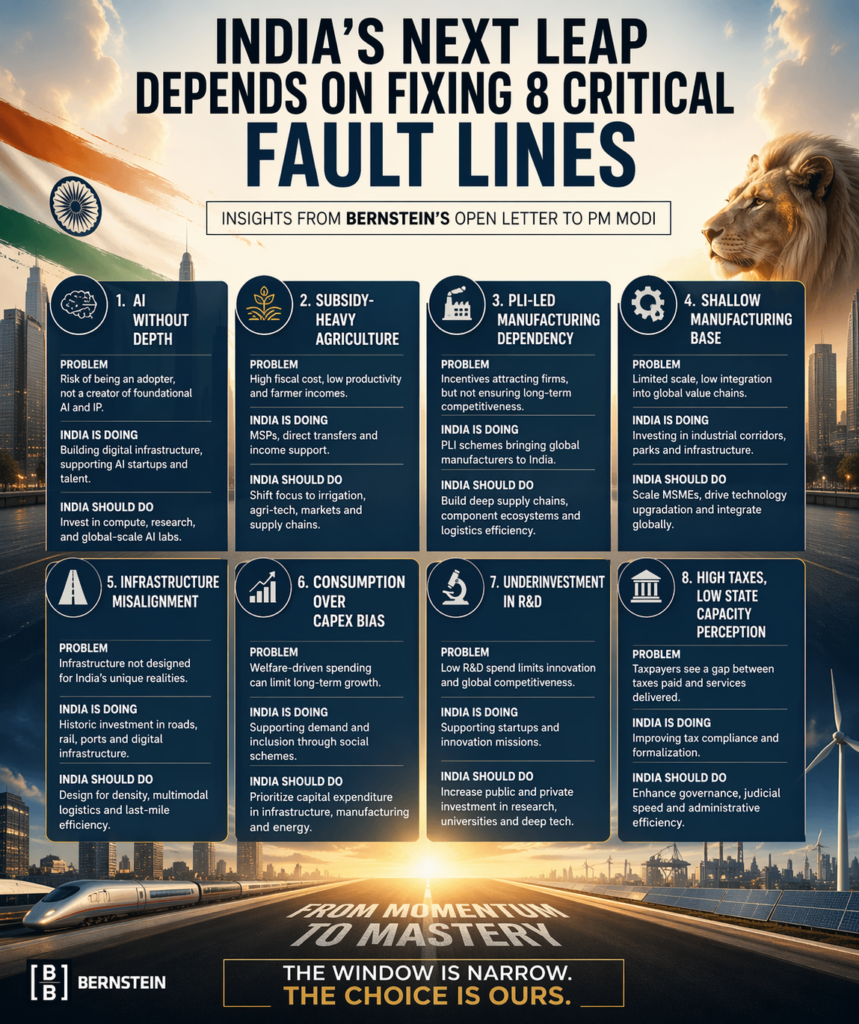
India today stands at one of the most consequential economic junctures in its post-liberalization history. With strong GDP growth, rising global relevance, and a rapidly digitizing economy, the country is often positioned as the world’s next growth engine. Yet, as highlighted in a recent open letter by Bernstein addressed to Narendra Modi, beneath this momentum lie eight structural fault lines that could determine whether India becomes a global economic powerhouse or plateaus into a middle-income trap.
This report provides a deep, analytical exploration of these eight fault lines, examining the current situation, underlying structural challenges, global comparisons, and most importantly, strategic recommendations for India’s next phase of growth.
1. AI Without Depth: Risk of Becoming a Consumer Economy
The Problem
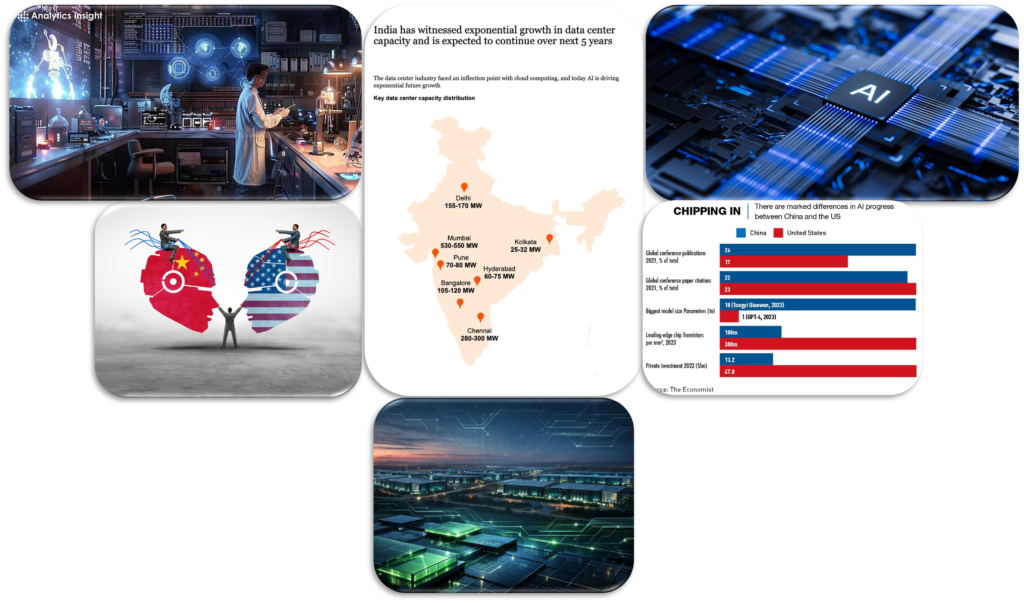
India is rapidly adopting artificial intelligence across sectors such as fintech, healthcare, and e-governance. However, its role is largely that of an implementer rather than a creator. Unlike the United States or China, India lacks foundational AI models, proprietary compute infrastructure, and deep research ecosystems.
Current Position
India has made strong strides through:
- Digital public infrastructure (UPI, Aadhaar)
- A vibrant startup ecosystem
- Government-led AI missions
However, most AI solutions rely on imported models and foreign cloud infrastructure, limiting strategic autonomy.
Global Comparison
- The US leads in foundational models and compute power.
- China dominates in applied AI and scale.
- India risks becoming a low-margin AI services hub.
What India Should Do
India must:
- Invest in sovereign AI infrastructure
- Build national-scale compute clusters
- Strengthen academia-industry research collaboration
- Incentivize deep-tech startups beyond SaaS
2. Subsidy-Heavy Agriculture: High Spend, Low Productivity
The Problem
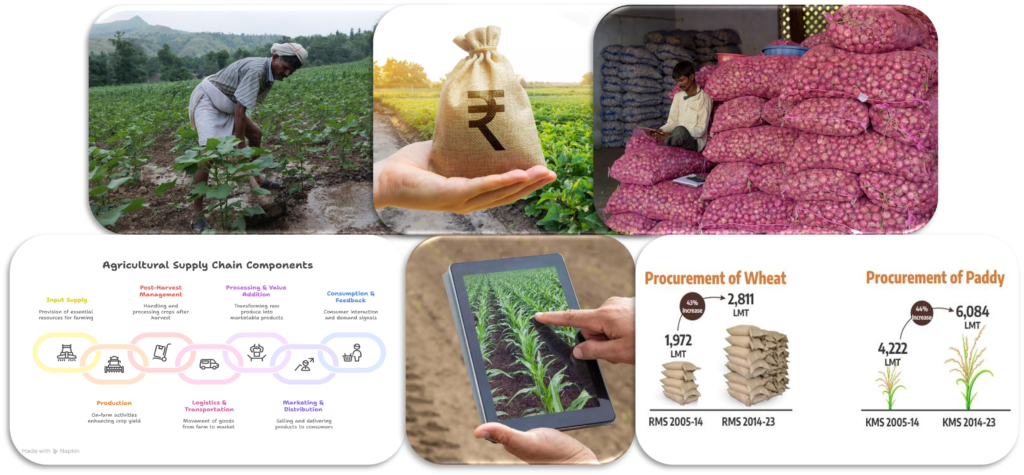
India spends trillions annually on subsidies including MSP, fertilizers, and electricity. Despite this, agricultural productivity and farmer incomes remain low.
Current Position
Government initiatives include:
- PM-KISAN income support
- MSP procurement
- Fertilizer subsidies
These ensure income stability but not structural transformation.
Core Issue
Subsidies distort incentives, encourage water-intensive crops, and limit diversification.
What India Should Do
- Shift subsidies toward capital investment
- Expand irrigation and water management
- Promote agri-tech and precision farming
- Reform agricultural markets and logistics
3. PLI-Led Manufacturing Dependency: Incentives Without Ecosystems
The Problem
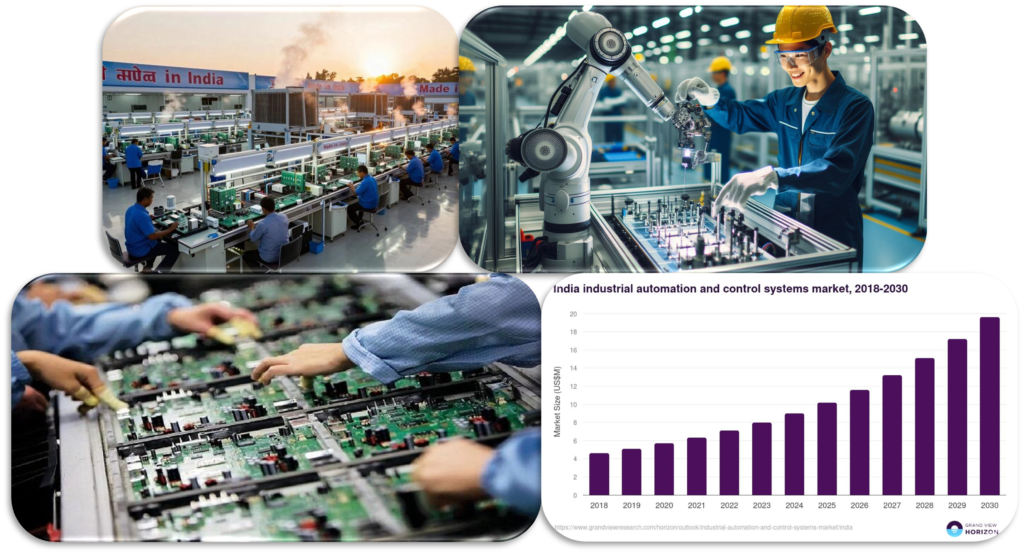
Production Linked Incentive (PLI) schemes have successfully attracted global manufacturers. However, they risk creating incentive-dependent industries.
Current Position
India has seen growth in:
- Mobile manufacturing
- Electronics assembly
- Renewable components
Yet, value addition remains low, with heavy import dependence.
Core Issue
India is assembling, not designing or producing critical components.
What India Should Do
- Develop component ecosystems
- Strengthen supplier networks
- Invest in logistics and industrial clusters
- Move from incentives to competitiveness
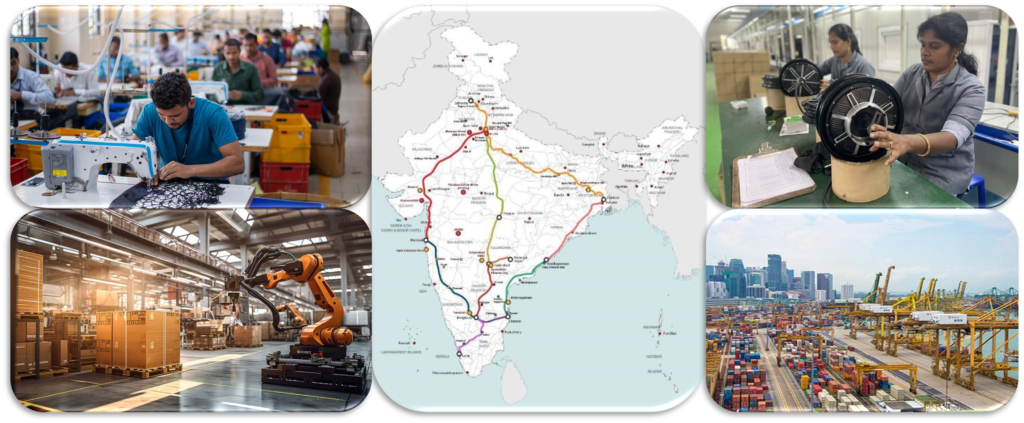
4. Shallow Manufacturing Base: Missing Depth and Scale
The Problem
India’s manufacturing sector lacks depth, particularly in mid-tier and high-value segments.
Current Position
Government investments in:
- Industrial corridors
- Make in India
- Infrastructure expansion
have created a foundation.
Core Issue
- Weak MSME scaling
- Low technology adoption
- Limited integration into global value chains
What India Should Do
- Enable MSMEs to scale through financing and tech adoption
- Integrate with global supply chains
- Focus on export-oriented manufacturing clusters
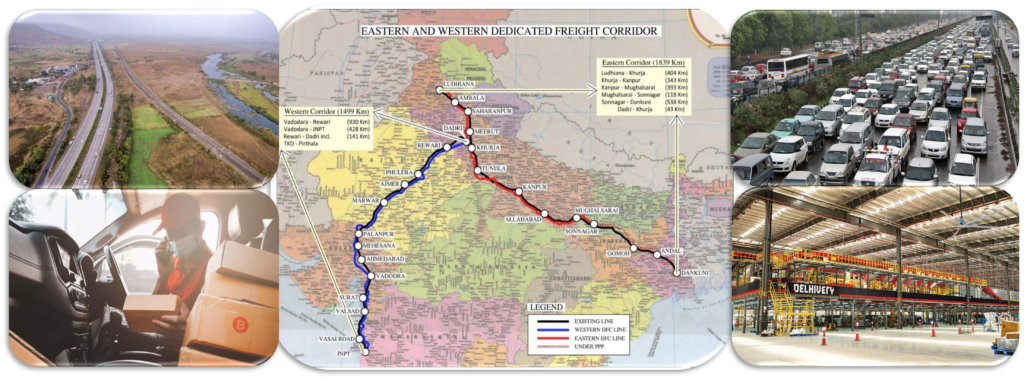
5. Infrastructure Misalignment: Scale Without Optimization
The Problem
India is investing heavily in infrastructure, but design inefficiencies remain.
Current Position
Significant achievements:
- Highway expansion
- Dedicated freight corridors
- Digital infrastructure
Core Issue
Infrastructure is not always aligned with:
- Urban density realities
- Multimodal logistics needs
- Last-mile connectivity challenges
What India Should Do
- Focus on integrated logistics systems
- Improve urban planning and mobility
- Enhance last-mile connectivity
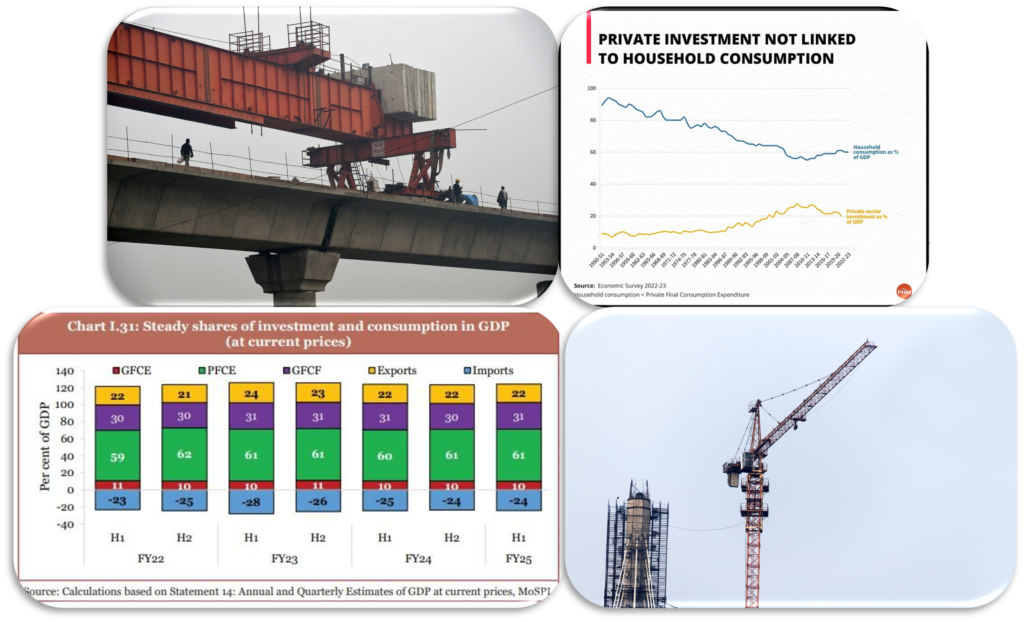
6. Consumption Over Capex Bias: Short-Term Gains vs Long-Term Growth
The Problem
India’s fiscal structure often leans toward consumption-driven policies rather than long-term capital investment.
Current Position
- Welfare schemes have boosted demand
- Social safety nets have improved inclusion
Core Issue
Over-reliance on consumption limits:
- Productivity growth
- Asset creation
- Long-term economic resilience
What India Should Do
- Prioritize capital expenditure
- Invest in infrastructure, manufacturing, and energy
- Balance welfare with productivity
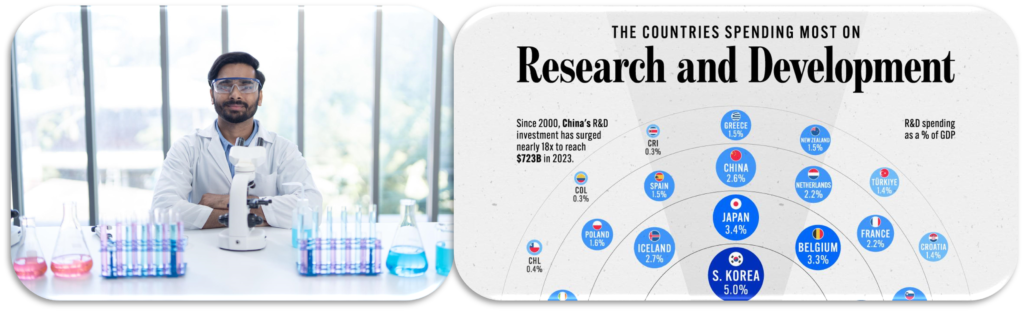
7. Underinvestment in R&D: Innovation Deficit
The Problem
India’s R&D spending remains below 1% of GDP, far lower than global peers.
Current Position
- Strong startup ecosystem
- Growing venture capital activity
Core Issue
- Limited deep-tech innovation
- Weak academia-industry collaboration
What India Should Do
- Increase public R&D funding
- Incentivize private sector research
- Build world-class research universities
8. High Taxes, Low State Capacity Perception

The Problem
While tax collections have improved, there is a perception gap between taxes paid and services delivered.
Current Position
- GST implementation improved compliance
- Digitalization of tax systems
Core Issue
- Administrative inefficiencies
- Judicial delays
- Governance gaps
What India Should Do
- Improve service delivery efficiency
- Strengthen institutions
- Enhance transparency and accountability
Strategic Recommendations: A Roadmap for India’s Next Leap
India must transition from momentum-driven growth to capability-driven growth.
Key Strategic Priorities
- Build deep capabilities in AI and technology
- Shift from subsidies to productivity investments
- Strengthen manufacturing ecosystems
- Invest aggressively in R&D
- Align infrastructure with real-world needs
- Improve governance efficiency
Conclusion: From Momentum to Mastery
India’s economic rise is real, but not guaranteed. The next decade will not be defined by growth rates alone, but by structural depth, innovation capacity, and institutional strength.
The Bernstein letter serves as a timely reminder that execution now matters more than intent.
India has the foundation.
The next step is transformation.
References (APA Format)
- Bernstein Research. (2026). Open Letter to Prime Minister Narendra Modi.
https://economictimes.indiatimes.com/markets/stocks/news/from-ai-to-subsidies-bernsteins-candid-open-letter-to-pm-modi-flags-8-critical-fault-lines/articleshow/130458507.cms - NITI Aayog. (2023). India’s AI Strategy Report.
https://www.niti.gov.in - World Bank. (2024). India Development Update.
https://www.worldbank.org - IMF. (2024). India Country Report.
https://www.imf.org - Ministry of Finance, Government of India. (2025). Economic Survey.
https://www.indiabudget.gov.in
Disclaimer
This report is intended for informational and analytical purposes only. The views expressed are based on publicly available information and independent analysis. They do not constitute financial, investment, or policy advice. Readers are encouraged to conduct their own research or consult professionals before making decisions based on this content.