A Deep-Dive Strategic Analysis of India’s Cement Sector, Leadership Imperatives, and Future Growth Trajectory
1. Introduction: Cement at an Inflection Point
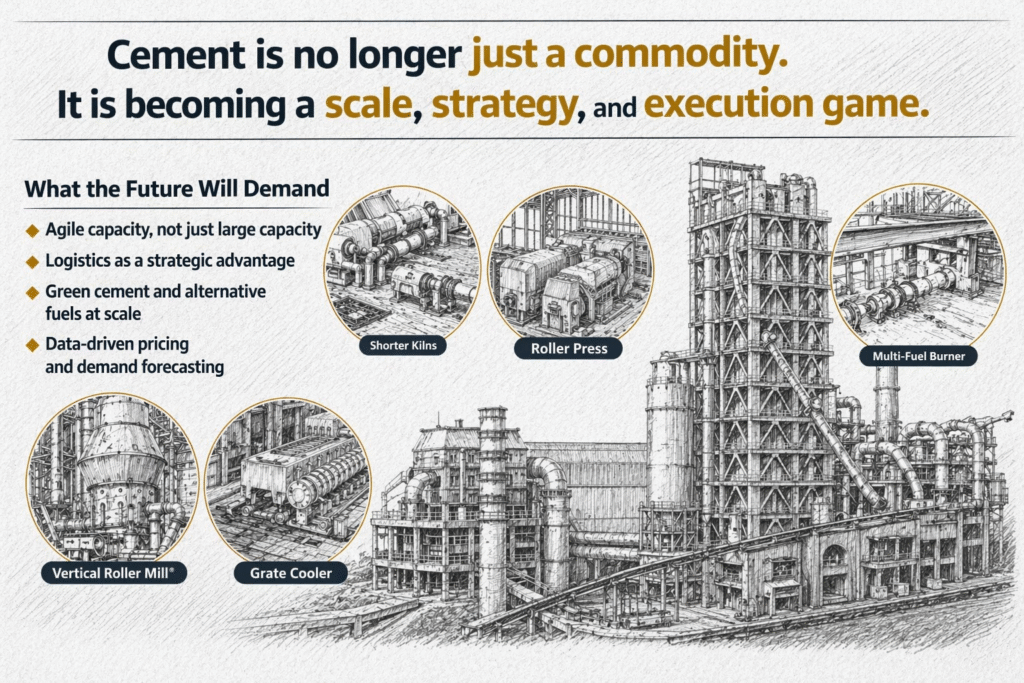
For decades, cement has been perceived as a low-differentiation, commodity-driven industry. However, the landscape is rapidly evolving. Cement today is no longer just about production volume. It is about scale, strategy, execution excellence, sustainability, and supply chain intelligence.
India, the world’s second-largest cement producer, is witnessing a transformation driven by infrastructure growth, urbanization, consolidation, and technology adoption. According to the IBEF November 2025 report, India’s cement demand is expected to grow at a CAGR of 7–8% in the near term, supported by housing and infrastructure expansion.
This article provides an in-depth, strategic, and forward-looking view of the cement industry, integrating insights from CRISIL, IBEF, and industry analysis.
2. Indian Cement Industry Overview
Market Size and Capacity
India’s cement industry has reached a critical scale milestone:
| Metric | Value |
|---|---|
| Total Installed Capacity | ~650–670 MTPA |
| Production (FY25) | ~453 MT |
| Expected Demand (FY27) | ~450–460 MT |
| Global Rank | 2nd Largest |
India’s installed capacity is expected to reach 850 MTPA by 2030 and 1350 MTPA by 2050, indicating massive long-term expansion potential.
Regional Capacity Distribution
| Region | Capacity (MTPA) |
|---|---|
| South | 221 |
| East | 135 |
| North | 127 |
| West | 89 |
| Central | 91 |
This regional imbalance creates both logistical challenges and strategic opportunities.
3. Demand Drivers: What is Fueling Growth
Infrastructure Push
Government-led capital expenditure is a major catalyst:
- ₹10 lakh crore infrastructure outlay
- Massive investments in roads, railways, ports, and urban development
- Mega projects like the Mumbai-Ahmedabad Bullet Train
These initiatives significantly increase cement consumption.
Housing and Urbanization
- Housing accounts for ~65% of cement demand
- Urban population expected to reach ~40% by 2030
- Increasing nuclear families driving housing demand
Economic Growth
India’s GDP is projected to grow ~6.5%, supporting sustained demand across sectors.
4. Competitive Landscape and Industry Consolidation
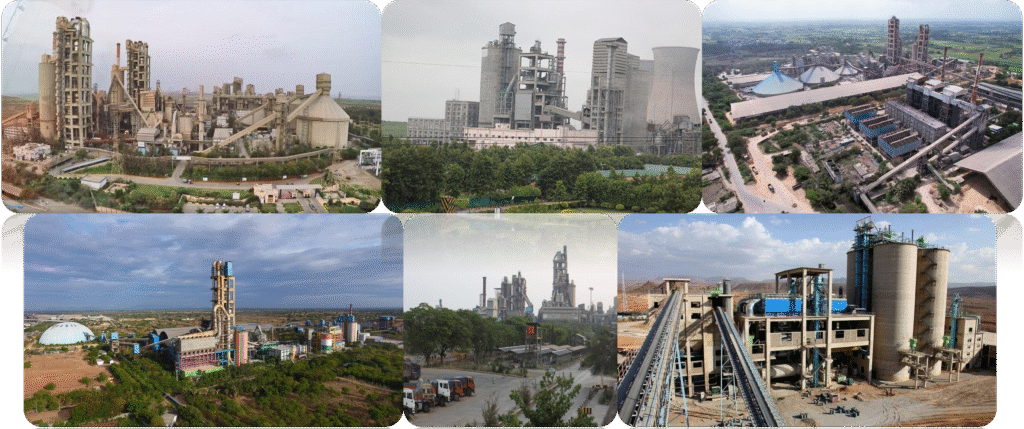
The Indian cement industry is increasingly consolidating:
- Top 5 players control ~48% of total capacity
- Top 10 players expected to acquire ~140 MT capacity over 5 years
Key Players (Approx. Installed Capacity)
| Company | Capacity (MTPA) |
|---|---|
| UltraTech Cement | ~205 |
| Adani (Ambuja + ACC) | ~140 |
| Shree Cement | ~50 |
| Dalmia Bharat | ~45 |
| Nuvoco Vistas | ~25 |
UltraTech Cement, the market leader, holds ~205 MTPA capacity, translating to ~31–32% share of India’s ~650 MTPA capacity.
5. Cost Structure and Profitability Pressures
The cement industry operates under tight margins due to:
Key Cost Components
| Cost Element | Share |
|---|---|
| Power & Fuel | 25–30% |
| Freight & Logistics | 20–25% |
| Raw Materials | 10–15% |
| Others | Balance |
Fuel costs, especially coal and pet coke, remain highly volatile and significantly impact profitability.
Pricing Dynamics
- Cement prices vary regionally
- Pricing power depends on demand-supply balance
- Consolidation is improving pricing discipline
6. Technology Transformation in Cement
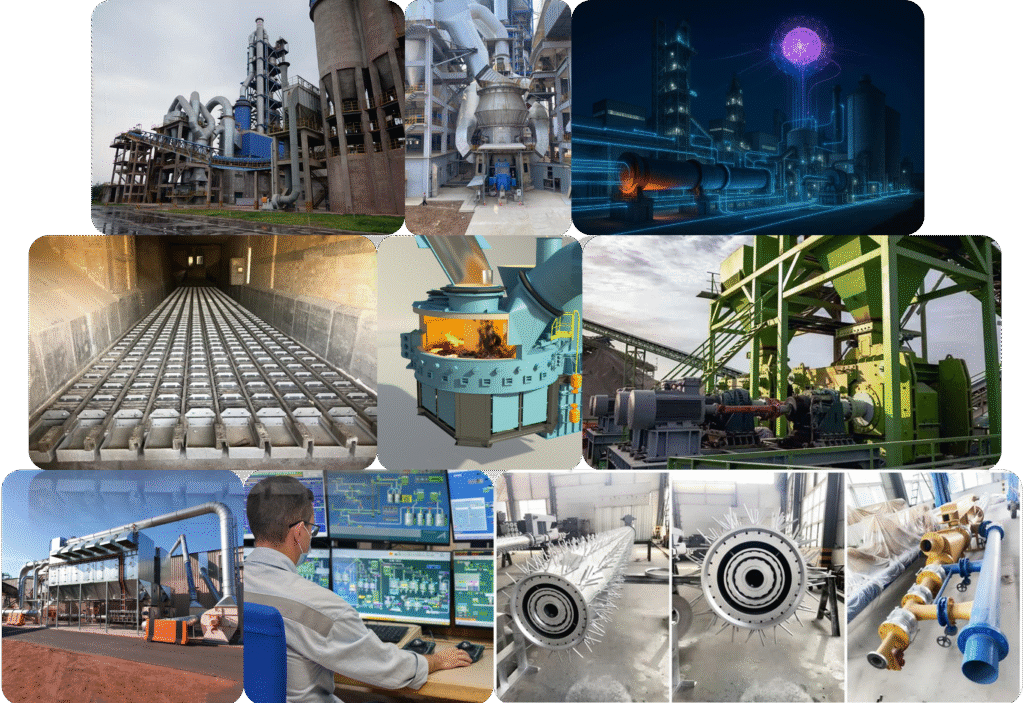
Technology is reshaping the industry:
Key Innovations
- Vertical Roller Mills for energy efficiency
- Waste Heat Recovery Systems reducing energy costs
- Alternative fuels like biomass and industrial waste
- AI-driven predictive maintenance
- Digital supply chain optimization
These technologies are critical for both cost reduction and sustainability.
7. Sustainability and ESG Imperatives
The cement industry contributes ~7–8% of global CO₂ emissions. This makes decarbonization a strategic necessity.
Key ESG Focus Areas
- Reduction in clinker factor
- Use of blended cement (PPC, PSC)
- Renewable energy adoption
- Carbon capture technologies
- Waste co-processing
Indian cement companies are among the most energy-efficient globally.
8. Challenges Facing the Industry
Despite strong growth, several challenges persist:
Structural Challenges
- High logistics cost due to fragmented demand
- Regional imbalance in supply
- Environmental regulations
- Raw material availability
External Risks
- Global coal price volatility
- Geopolitical disruptions
- Infrastructure execution delays
Operational Challenges
- Capacity utilization fluctuations
- Pricing pressure in competitive markets
- Working capital intensity
9. Future Outlook: 2030 and BeyondThe future of the cement industry is defined by four major shifts:
1. Scale Consolidation
Large players will dominate through acquisitions and expansion.
2. Green Transformation
Net-zero pathways will reshape production processes.
3. Digitalization
AI, IoT, and data analytics will drive efficiency.
4. Logistics Advantage
Supply chain optimization will become a key differentiator.
India’s cement capacity is expected to reach:
| Year | Capacity |
|---|---|
| 2025 | ~650–670 MTPA |
| 2030 | ~850 MTPA |
| 2050 | ~1350 MTPA |
10. Strategic Recommendations for Leadership and Boards
1. Shift from Volume to Value
Focus on premium products, branding, and differentiated offerings.
2. Build Logistics as a Core Capability
Invest in:
- Rail and coastal shipping
- Regional grinding units
- Digital logistics platforms
3. Accelerate ESG Investments
Adopt:
- Green cement technologies
- Renewable energy
- Carbon capture
4. Invest in Digital Transformation
Leverage:
- Predictive analytics
- Demand forecasting models
- Smart pricing strategies
5. Strategic M&A
Acquire regional players to expand footprint and optimize capacity.
11. Conclusion
The cement industry is undergoing a structural transformation. What was once a commodity-driven business is now a strategic, capital-intensive, technology-led sector.
Leadership in this industry will not be defined by capacity alone. It will be defined by the ability to integrate scale with execution, sustainability with profitability, and technology with market intelligence.
The winners will be those who move early, invest boldly, and execute relentlessly.
12. Future Road Ahead
The next decade will redefine the cement industry through:
- Green cement becoming mainstream
- Digital pricing ecosystems
- Fully integrated supply chains
- Hyper-local production networks
- Increased private sector dominance
India’s infrastructure story will ensure sustained demand, making cement one of the most critical sectors in economic development.
13. References
- India Brand Equity Foundation. (2025). Cement Industry Report. Retrieved from https://www.ibef.org
- CRISIL Intelligence. (2025). Market Review of Indian Cement Sector.
- Ministry of Finance, Government of India. (2025). Union Budget 2025–26.
- Cement Manufacturers Association. Industry data and statistics.
- IMF. (2025). World Economic Outlook.
14. Disclaimer
This report is prepared for informational and educational purposes only. The data and insights are derived from publicly available sources such as IBEF, CRISIL, and government publications, which are believed to be reliable but not independently verified. Any projections, forecasts, or opinions expressed in this report are subject to change based on market conditions, regulatory developments, and economic factors.
This report does not constitute investment advice, financial recommendation, or business solicitation. Readers are advised to conduct their own due diligence and consult professional advisors before making any business or investment decisions.