Introduction: The Return That Means More Than a Comeback
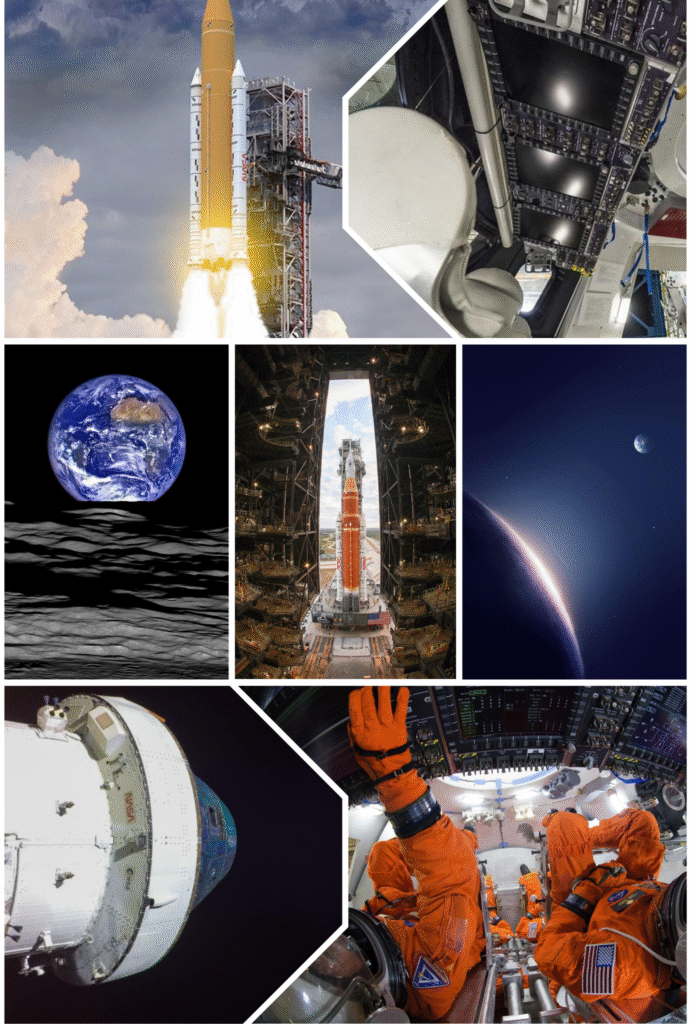
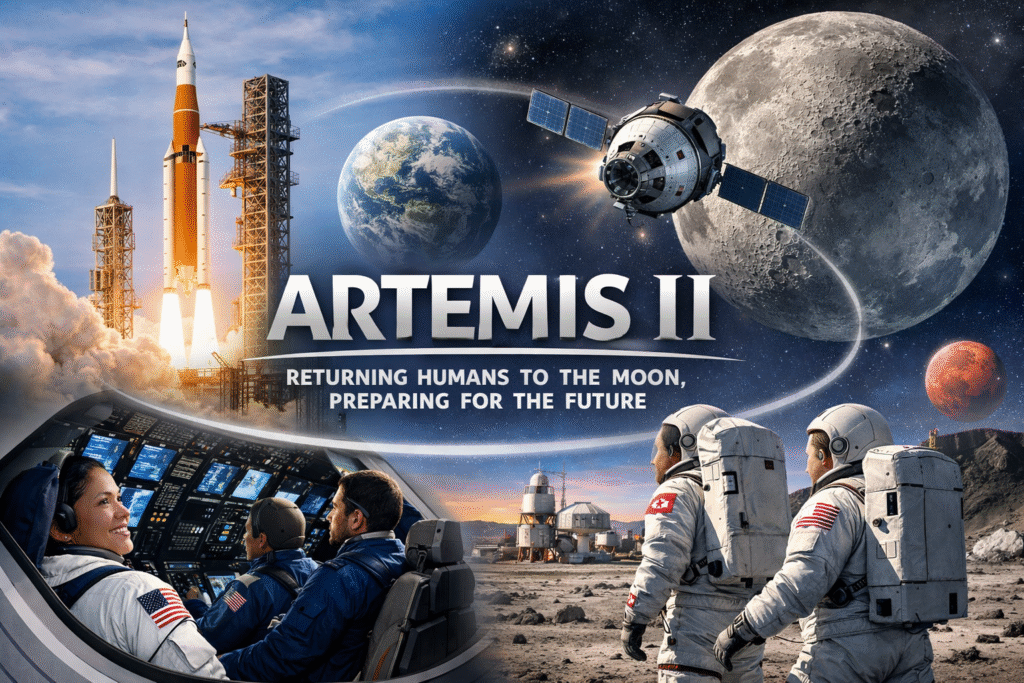
After more than five decades since humans last ventured beyond low Earth orbit, the world is witnessing a defining moment in space exploration. The Artemis program, led by NASA, is not merely a return to the Moon. It is a transition toward building a sustained human presence beyond Earth. At the center of this transformation lies Artemis II, the first crewed mission of the program.
Unlike the Apollo era, which was driven by urgency and geopolitical competition, Artemis represents a carefully structured, long-term strategy. Artemis II is the critical bridge between proving that systems work and proving that humans can operate reliably in deep space. It reflects a deeper shift from symbolic achievement to operational capability.
The Artemis Roadmap: A Phased Approach to Execution
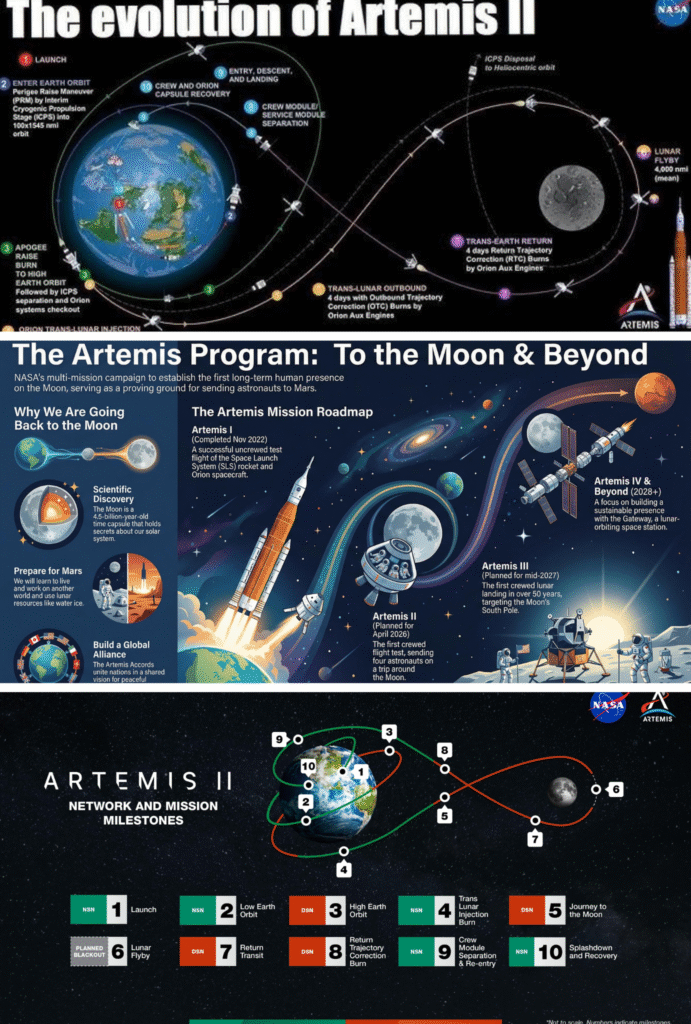
The Artemis program has been designed with a disciplined, phased approach that mirrors best practices in large-scale strategic execution. Instead of attempting a single high-risk leap, NASA has broken down the journey into three clearly defined missions.
| Mission | Nature | Strategic Role | Outcome |
|---|---|---|---|
| Artemis I | Uncrewed | System validation | Proved deep space capability |
| Artemis II | Crewed flyby | Human validation | Proves operational readiness |
| Artemis III | Crewed landing | Sustainability | Establishes lunar presence |
Artemis I, completed in 2022, focused entirely on testing systems. It validated the Space Launch System rocket and the Orion spacecraft under real deep-space conditions. Artemis II builds upon this by introducing astronauts into the equation, testing life-support systems, navigation, and human performance in deep space. Artemis III will take the final step by landing humans on the Moon and beginning infrastructure development.
This structured progression reduces uncertainty and creates a clear path from ambition to execution.
Mission Architecture: Engineering the Future of Deep Space Travel
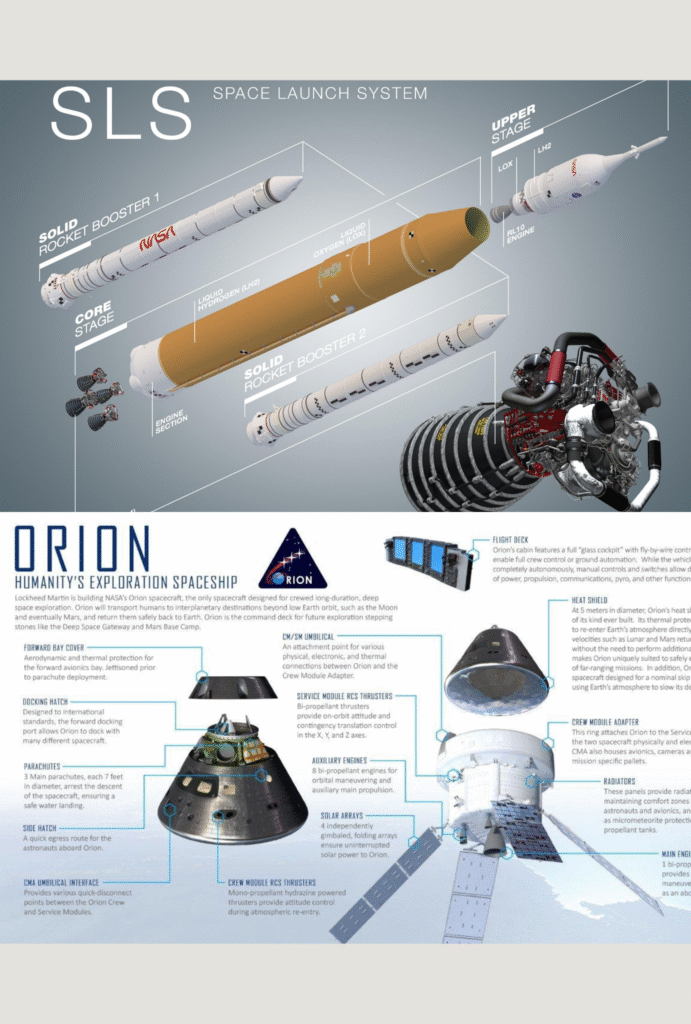
Artemis II is powered by a combination of advanced engineering systems that together enable human survival and performance in deep space.
| System | Developed By | Function | Strategic Importance |
|---|---|---|---|
| Space Launch System (SLS) | NASA | Heavy-lift rocket | Enables deep space missions |
| Orion Spacecraft | NASA | Crew module | Human habitation and safety |
| European Service Module | ESA | Power and propulsion | Sustains mission operations |
The Space Launch System is among the most powerful rockets ever built, capable of carrying astronauts and cargo beyond Earth’s orbit. The Orion spacecraft is designed for long-duration missions, equipped with advanced life-support and radiation protection systems. Supporting it is the European Service Module, which provides propulsion, electrical power, and essential consumables.
Together, these systems represent a new generation of space infrastructure designed not just for exploration, but for sustained operations.
Mission Execution: Precision, Discipline, and Risk Management
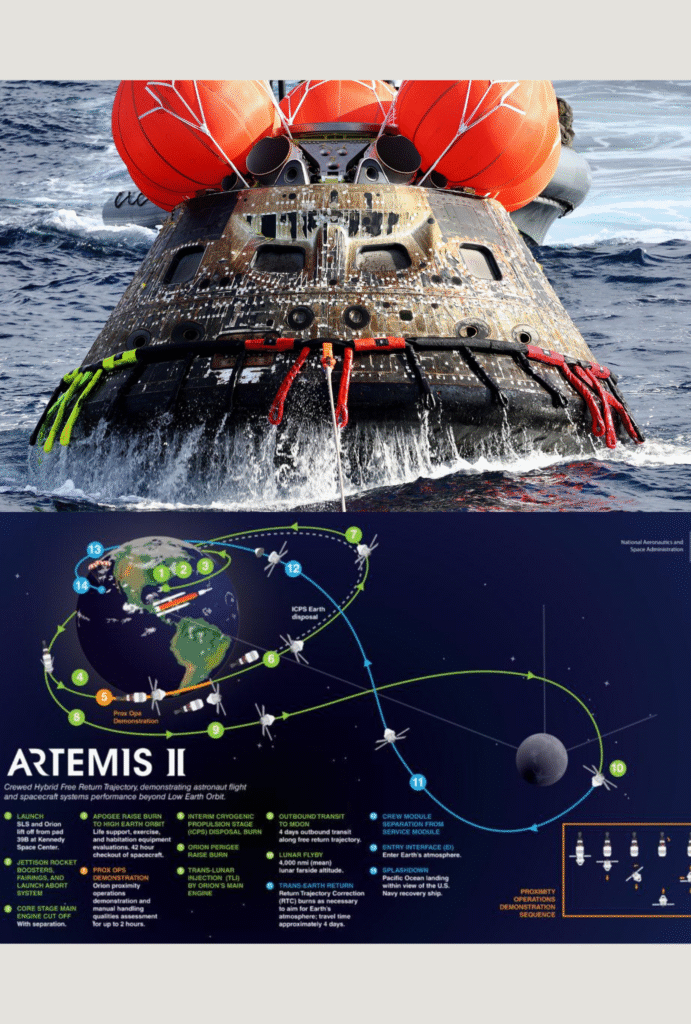
Artemis II follows a carefully planned free-return trajectory, a path that uses the Moon’s gravity to bring the spacecraft back to Earth without requiring major propulsion corrections. This design ensures mission safety even in the event of system failure.
The mission unfolds across multiple stages, each requiring precise execution.
| Phase | Description | Key Objective |
|---|---|---|
| Launch | Lift-off and Earth orbit | System activation |
| Translunar Injection | Departure from Earth orbit | Begin Moon journey |
| Lunar Flyby | Orbit around Moon | System and crew validation |
| Return | Re-entry and splashdown | Safe recovery |
The astronauts travel approximately 694,000 miles over a period of about 10 days. During this journey, they test navigation systems, communication technologies, and life-support systems under real deep-space conditions.
The re-entry phase is particularly demanding, with speeds exceeding 24,000 miles per hour and temperatures reaching extreme levels. Successful completion of this phase validates one of the most critical aspects of human spaceflight safety.
What Artemis II Achieves: Beyond Technical Success
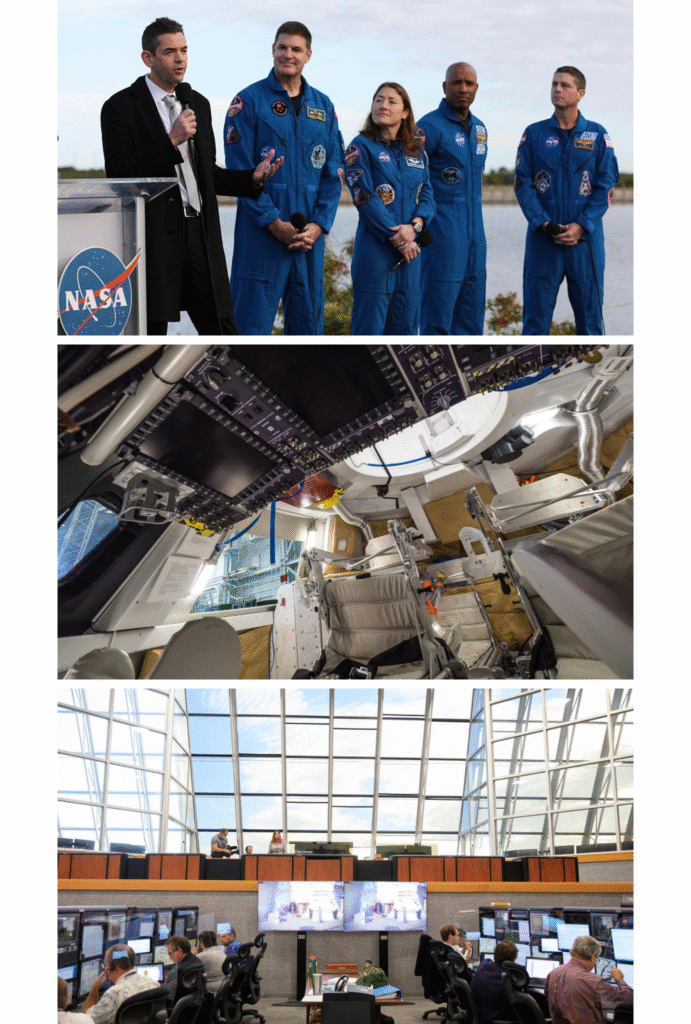
Artemis II is not just a technological milestone. It is a strategic achievement that redefines what is possible.
From a technical standpoint, the mission proves that humans can once again travel safely beyond low Earth orbit. It validates life-support systems, deep-space communication, and spacecraft navigation under real conditions.
From an operational perspective, it demonstrates that complex, multi-system missions can be executed with precision. It reflects the maturity of modern aerospace engineering and mission planning.
From a strategic standpoint, Artemis II marks the beginning of a new era. It transitions space exploration from isolated missions to sustained presence and long-term planning.
Strategic and Economic Impact: A Catalyst Beyond Space
The implications of Artemis II extend far beyond the boundaries of space exploration. The mission acts as a catalyst for innovation across multiple industries, including advanced manufacturing, materials science, artificial intelligence, and communication technologies.
| Impact Area | Description | Long-Term Effect |
|---|---|---|
| Technology | Innovation in systems and materials | Cross-industry advancements |
| Economy | Job creation and private sector growth | Expansion of space economy |
| Collaboration | International partnerships | Shared global progress |
| Education | Increased STEM interest | Future talent development |
The program also reinforces the importance of global collaboration. Contributions from international partners highlight a shift from competition to cooperation in addressing complex challenges.
Artemis vs Apollo: From Race to Sustainability
| Dimension | Apollo Program | Artemis Program |
|---|---|---|
| Objective | Reach the Moon | Build and sustain presence |
| Approach | One-time missions | Phased long-term strategy |
| Technology | Analog systems | Digital and AI-enabled |
| Collaboration | National effort | Global partnerships |
The difference between Apollo and Artemis reflects a broader evolution in thinking. Apollo was about proving capability. Artemis is about building continuity.
Leadership and Execution: A Case Study for Modern Strategy
Artemis II offers valuable insights for leaders across industries. It demonstrates how large-scale visions can be translated into actionable strategies through phased execution.
The program aligns technology, people, and processes toward a common goal. It emphasizes risk management, adaptability, and continuous validation. Each phase builds confidence and reduces uncertainty, ensuring that progress is both measurable and sustainable.
This approach is particularly relevant in today’s complex business environment, where long-term success depends on disciplined execution rather than bold ideas alone.
The Road Ahead: From the Moon to Mars
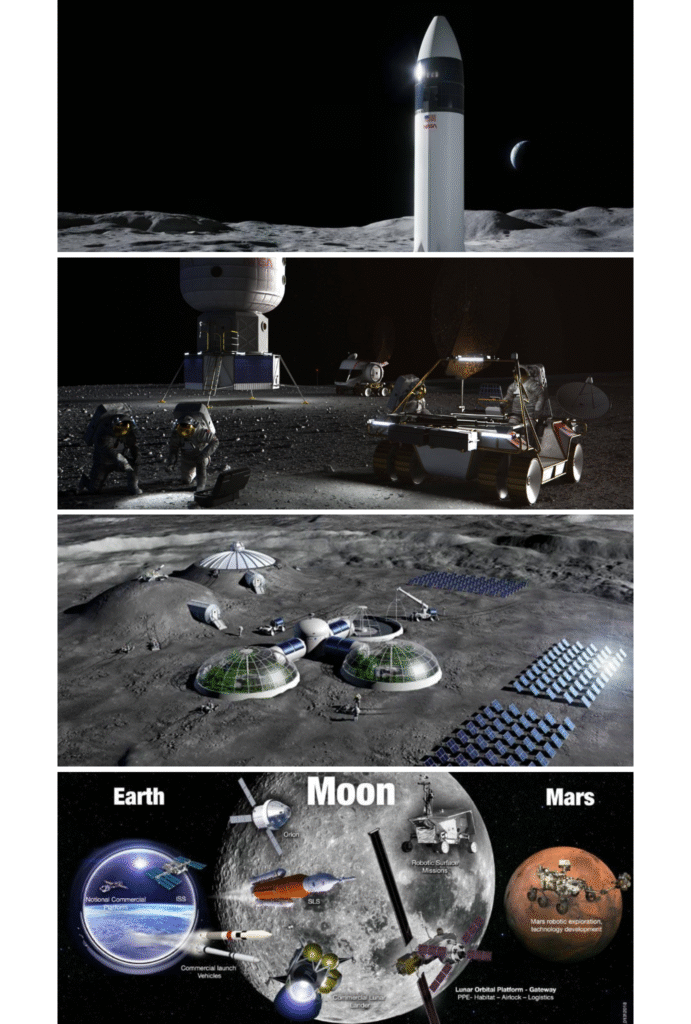
Artemis II is not the final destination. It is a stepping stone toward a broader vision.
Artemis III aims to land humans on the Moon and begin building infrastructure such as lunar habitats and research stations. Beyond that, the program envisions the development of the Lunar Gateway, a space station orbiting the Moon that will serve as a hub for future missions.
Ultimately, these efforts are preparing humanity for missions to Mars. The Moon becomes a testing ground where technologies, systems, and operational models can be refined before venturing further into deep space.
Conclusion: The Beginning of a New Era
Artemis II represents a decisive moment in human history. It marks the transition from exploration to expansion, from ambition to execution.
The mission demonstrates that humanity is no longer limited to reaching new frontiers. It is now capable of building and sustaining presence beyond Earth. It reflects the power of structured strategy, technological innovation, and global collaboration.
The question is no longer whether we can go to the Moon. The question is how effectively we can use it as a platform for the future.
Artemis II is not just a mission. It is the foundation of what comes next.
References
- NASA. (2026). Artemis II Mission Overview. Available at: https://www.nasa.gov
- NASA. (2022). Artemis I Flight Test Results and Analysis. Available at: https://www.nasa.gov
- European Space Agency. (2026). Orion European Service Module Overview. Available at: https://www.esa.int
- Space.com. (2026). Artemis II: Mission Details and Developments. Available at: https://www.space.com
- Reuters. (2026). Global Impact of Artemis II Mission. Available at: https://www.reuters.com
- National Academies of Sciences. (2023). Human Space Exploration Strategy Report. Available at: https://www.nationalacademies.org
- Lockheed Martin. (2026). Orion Spacecraft Program Overview. Available at: https://www.lockheedmartin.com
- Canadian Space Agency. (2026). Canada’s Role in Artemis Missions. Available at: https://www.asc-csa.gc.ca
- SpaceX. (2026). Human Landing System and Artemis Collaboration. Available at: https://www.spacex.com
- National Geographic. (2026). The Future of Moon and Mars Exploration. Available at: https://www.nationalgeographic.com