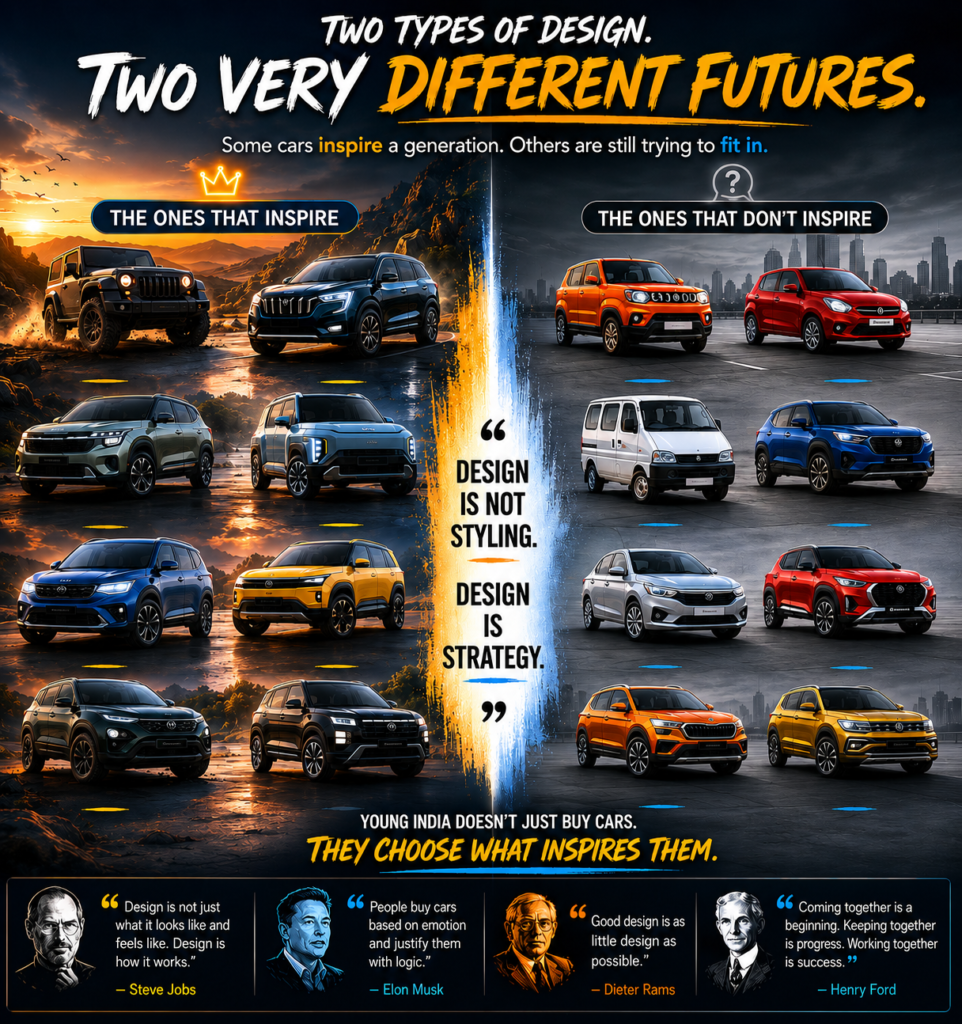
The Automotive Industry Is Entering An Emotional Era
For decades the automotive industry operated on a relatively simple formula.
Build reliable vehicles. Improve fuel efficiency. Add features. Compete on pricing. Expand dealer networks. Increase production volumes.
That model created some of the world’s largest automobile companies.
But today the market is changing rapidly.
A new generation of consumers is redefining what automotive success looks like.
Young buyers are no longer evaluating vehicles only through technical specifications, mileage comparisons or pricing advantages. They are evaluating vehicles emotionally, socially and psychologically.
They are asking entirely different questions:
Does this car reflect my personality?
Does it create aspiration?
Does it look premium and bold?
Does it stand out?
Does it create excitement?
Does it feel modern?
Does it represent who I want to become?
This transformation is changing the rules of competition in the automotive industry.
The companies that understand this shift are building emotional brands.
The companies that ignore it risk becoming functionally efficient but emotionally invisible.
And in today’s highly visual and digitally connected world emotional invisibility is one of the biggest strategic risks any brand can face.
The Shift From Utility To Identity
Historically automobiles represented mobility and practicality.
Today they represent identity and self-expression.
This shift is especially visible among younger consumers across India and global markets.
Cars are no longer just transportation products parked in garages. They are now social symbols visible on Instagram reels, YouTube reviews, road trips, influencer content and digital lifestyles.
The consumer relationship with cars has fundamentally changed.
A vehicle is now part of:
- Personal branding
- Social media identity
- Lifestyle projection
- Emotional aspiration
- Community belonging
- Cultural positioning
This is why some vehicles instantly capture attention while others disappear despite offering similar pricing and features.
Consumers remember how products make them feel.
Not only what they technically deliver.
Steve Jobs once said:
“Design is not just what it looks like and feels like. Design is how it works.”
That statement has become extremely relevant for today’s automotive market.
Because design is no longer surface-level styling.
Design is becoming strategic communication.
Why Certain Automotive Brands Create Stronger Emotional Pull
Across India certain automotive brands are creating stronger emotional engagement than others.
The reason is not merely engineering capability.
It is design thinking.
Some companies understand that design creates anticipation before the engine even starts.
The lighting signature.
The stance.
The front fascia.
The road presence.
The interior experience.
The visual confidence.
The emotional storytelling.
All of these elements create psychological differentiation.
This is why some vehicles generate excitement immediately after launch while others struggle to create conversation despite aggressive marketing.
The strongest automotive brands understand one important reality:
People buy emotionally and justify logically.
Elon Musk summarized this perfectly:
“People buy cars based on emotion and justify them with logic.”
This principle explains why emotional design increasingly influences:
- Brand preference
- Pricing power
- Customer loyalty
- Social media visibility
- Youth engagement
- Market aspiration
- Premium perception
The future automotive winners will not only compete on horsepower and features.
They will compete on emotional resonance.
Design Is Becoming A Strategic Advantage
In many traditional organizations design is still treated as a downstream activity.
Engineering finishes the product first.
Design is adjusted later.
That mindset is becoming outdated.
Globally the most influential companies place design at the center of business strategy.
Apple transformed consumer electronics through design simplicity and emotional connection.
Tesla transformed electric vehicles into aspirational products instead of environmental compromises.
BMW built decades of emotional loyalty around driving experience and visual identity.
Nike turned footwear into culture.
These companies understood something fundamental:
Consumers rarely form emotional attachment to technical specifications alone.
They form attachment to experiences, feelings and identity.
The automotive industry is now entering the same transition.
Vehicles that emotionally inspire consumers will increasingly outperform vehicles designed only around utility.
This does not mean engineering becomes less important.
It means engineering alone is no longer enough.
The Rise Of The Design Economy
We are entering what can be called the “Design Economy.”
In this environment products are judged not only by functionality but also by emotional and visual intelligence.
Consumers now expect:
- Strong visual identity
- Premium aesthetics
- Digital-era appeal
- Human-centered experiences
- Emotional storytelling
- Design consistency
This trend is accelerating because of social media.
Platforms like Instagram, YouTube and TikTok reward visual impact.
Products that look emotionally powerful generate organic marketing.
Consumers voluntarily share them.
Influencers amplify them.
Communities discuss them.
The product itself becomes advertising.
This creates enormous strategic value.
In the automotive industry road presence is becoming brand presence.
And design is becoming a growth multiplier.
Why Young Consumers Think Differently
The younger generation grew up in a digital-first world.
They were exposed to:
- Global automotive trends
- International design standards
- Luxury branding
- Visual storytelling
- Premium digital experiences
As a result their expectations evolved dramatically.
They do not separate design from functionality.
For them great design is part of functionality.
They expect products to feel emotionally rewarding.
They also seek individuality.
Cars are increasingly viewed as extensions of ambition and personality.
This explains why younger consumers are drawn toward products that:
- Look futuristic
- Create road presence
- Feel differentiated
- Offer emotional excitement
- Reflect modern lifestyles
In many cases emotional perception influences purchase consideration before technical evaluation even begins.
This is one of the biggest shifts reshaping modern automotive strategy.
The Danger Of Becoming Forgettable
One of the biggest risks for automotive companies today is not technological failure.
It is becoming forgettable.
A product that creates no emotional memory struggles to sustain long-term relevance.
Consumers may initially purchase based on pricing or discounts.
But enduring loyalty is built emotionally.
The automotive companies that fail to evolve their design language often face:
- Weak aspirational pull
- Reduced youth engagement
- Limited premium positioning
- Lower organic visibility
- Weaker emotional differentiation
Over time this creates strategic disadvantage.
Because modern consumers increasingly reward brands that inspire them emotionally.
Good products satisfy needs.
Great products create desire.
That difference changes industries.
Design Thinking Must Move Beyond Styling
Many companies still misunderstand design thinking.
They believe design simply means aesthetics.
Real design thinking is much deeper.
It includes:
- Consumer psychology
- User experience
- Emotional mapping
- Human behavior
- Functional simplicity
- Visual storytelling
- Brand consistency
- Experience orchestration
The best-designed automotive products are not merely attractive.
They create emotional clarity.
Every design element communicates intention.
The product feels purposeful.
That is why some vehicles instantly feel premium even before consumers examine specifications.
Design influences perception faster than logic.
And perception often drives purchasing behavior.
The Role Of Social Media In Automotive Success
Social media has amplified the importance of design exponentially.
Today consumers discover vehicles online long before they visit dealerships.
The first interaction often happens through:
- Instagram content
- Automotive influencers
- YouTube reviews
- Digital launches
- User-generated content
- Viral videos
This means visual impact directly influences discoverability.
Cars with stronger visual identity naturally perform better in digital environments.
They generate more clicks.
More engagement.
More conversations.
More emotional anticipation.
This creates a powerful competitive advantage.
In the digital era aesthetics influence algorithms.
And algorithms influence consumer attention.
That makes design strategically critical.
The Future Of Automotive Competition
The next decade will transform the automotive sector dramatically.
Electric vehicles.
Connected mobility.
AI integration.
Autonomous technologies.
Software-defined experiences.
Sustainability expectations.
All of these trends will reshape the industry.
But amid all these technological changes one factor will remain constant:
Human emotion.
Consumers will continue choosing products that make them feel inspired.
Technology may evolve rapidly.
But emotional psychology evolves much slower.
This is why emotionally intelligent brands outperform purely functional competitors over long periods.
The automotive companies that combine:
- Strong engineering
- Exceptional design
- Emotional storytelling
- Digital relevance
- Human-centered experiences
will dominate future consumer preference.
Design Is No Longer A Department
The companies winning the future understand one important truth:
Design is not a department.
Design is leadership.
It influences:
- Brand perception
- Consumer aspiration
- Product desirability
- Premium positioning
- Market differentiation
- Long-term loyalty
Design now impacts strategy at the highest level.
The strongest automotive leaders recognize that emotional connection creates sustainable business advantage.
Products can be copied.
Features can be replicated.
Pricing can be matched.
But emotional resonance is extremely difficult to duplicate.
That is why design-led companies often become category leaders.
Conclusion: The Future Belongs To Brands That Inspire
The automotive industry is no longer competing only through engineering excellence.
It is competing through emotional intelligence.
Consumers are no longer looking for just a car.
They are looking for aspiration.
They are looking for identity.
They are looking for meaning.
They are looking for products that reflect who they are and who they want to become.
This is why the future belongs to companies that understand emotional design.
Because ultimately consumers may compare features logically.
But they remember brands emotionally.
And in the modern automotive world emotion is becoming one of the most powerful strategic advantages of all.
Design is no longer styling.
Design is strategy.
Design is cultural relevance.
Design is emotional leadership.
And the brands that inspire will define the future of mobility.