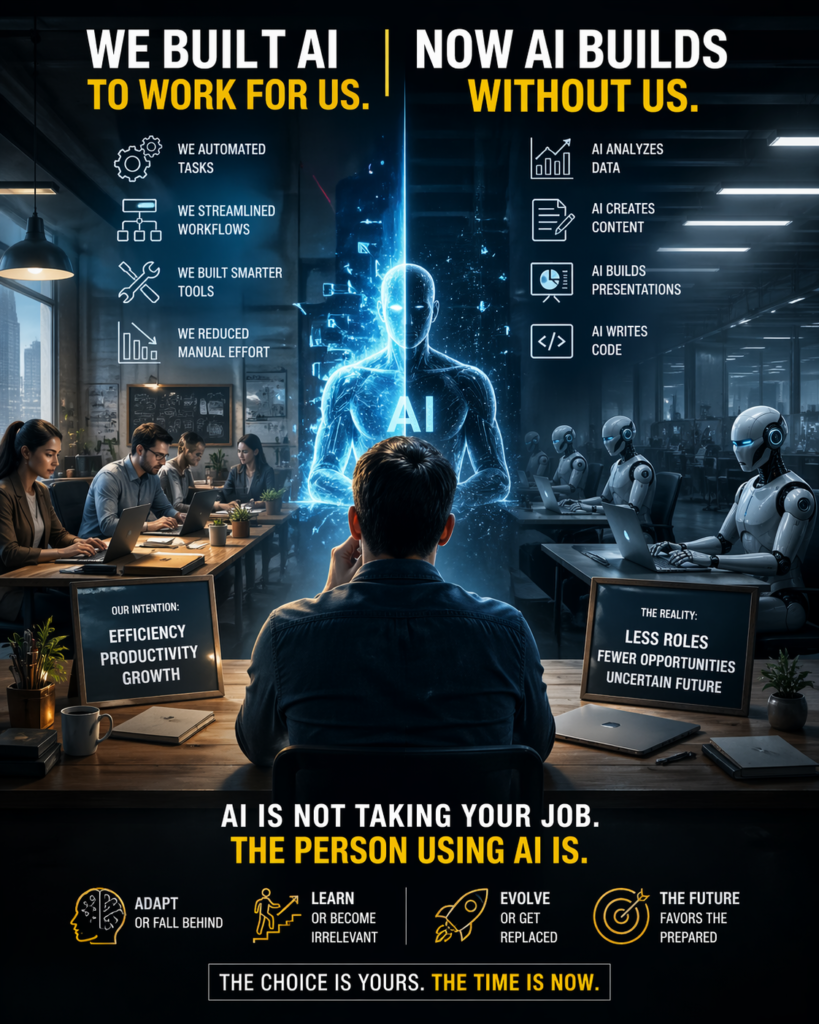
A Strategic, Economic, and Workforce Transformation Report
1. Introduction: The Paradox of Progress
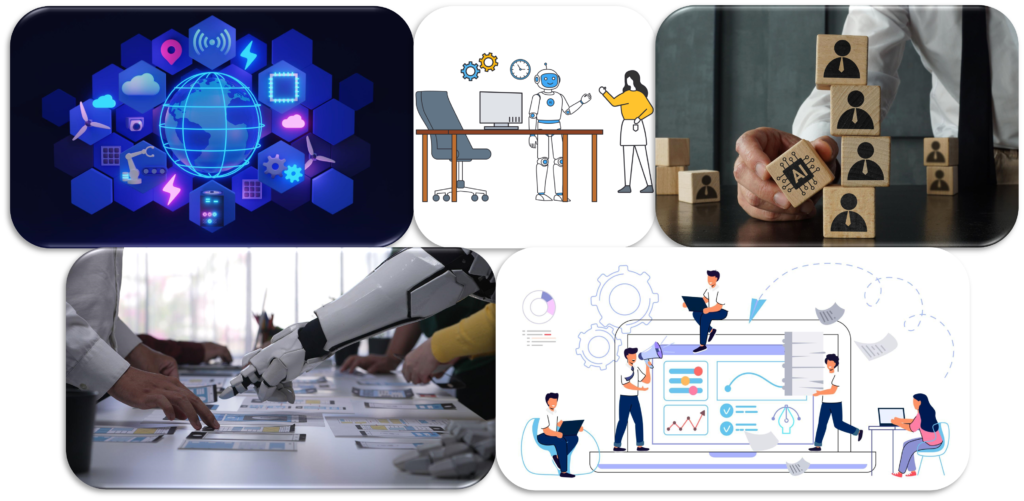
The evolution of artificial intelligence has reached a turning point where its creators, primarily white-collar professionals, are now among those most affected by its rapid adoption. Initially designed to enhance productivity, reduce repetitive work, and improve decision-making, AI tools have gradually advanced to perform complex cognitive tasks that were once considered uniquely human.
This phenomenon presents a paradox. The same workforce that invested time, skill, and innovation into building intelligent systems is now confronting the unintended consequence of job displacement, role transformation, and structural changes in the labor market. This is not merely a technological shift. It is a fundamental redefinition of work, value creation, and professional identity.
Historically, technological revolutions have displaced certain jobs while creating others. However, the current wave of AI differs in scope and speed. Unlike previous industrial or digital transformations, AI directly targets cognitive and analytical tasks, which are central to white-collar professions. As a result, roles in finance, marketing, consulting, and technology are being restructured at an unprecedented pace.
This report examines the strategic, economic, and social implications of this transformation. It explores why white-collar jobs are particularly vulnerable, how industries are evolving, and what individuals and organizations must do to adapt. The goal is to provide a clear, evidence-based understanding of the changing landscape and actionable insights for navigating it effectively.
2. Evolution of AI in the Workplace
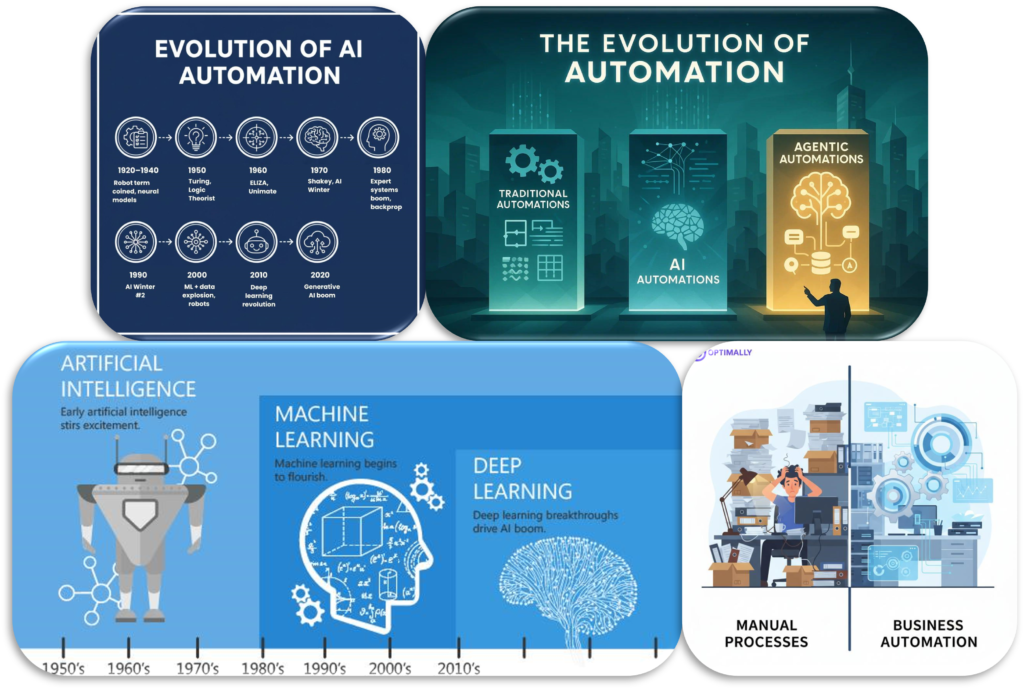
The integration of AI into the workplace has evolved through distinct phases, each marked by increasing capability and impact.
2.1 Early Automation Phase
In its initial stages, automation focused on rule-based systems. Tools such as spreadsheets, macros, and enterprise resource planning systems reduced manual effort and improved efficiency. These systems required human oversight and were limited to predefined tasks.
2.2 Analytical AI Phase
With the rise of machine learning, AI began to analyze large datasets, identify patterns, and support decision-making. This phase saw the introduction of predictive analytics in marketing, finance, and operations.
2.3 Generative AI Phase
The current phase is defined by generative AI, which can create content, write code, and simulate human-like communication. This marks a significant shift from assistance to substitution in certain tasks.
2.4 Comparative Evolution Table
| Phase | Key Technology | Role of AI | Human Dependency |
|---|---|---|---|
| Automation | Rule-based systems | Task execution | High |
| Analytics | Machine learning | Decision support | Moderate |
| Generative | Large language models | Content and cognitive tasks | Reduced |
| Autonomous (Emerging) | Multi-agent AI | Independent workflows | Low |
The transition from assistive to autonomous systems has accelerated dramatically in the past five years, driven by advances in computing power, data availability, and algorithmic sophistication.
3. Why White-Collar Jobs Are Highly Vulnerable
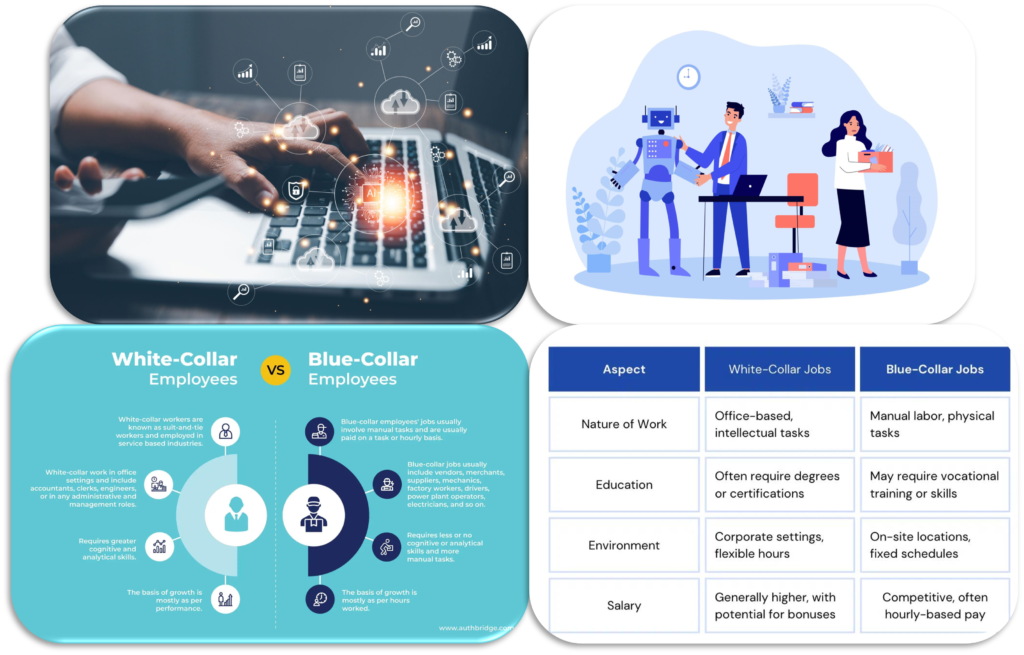
White-collar jobs are uniquely exposed to AI disruption due to their inherent characteristics.
3.1 Nature of Work
Most white-collar roles involve:
- Data processing
- Communication
- Documentation
- Analysis
These tasks are digital, structured, and repeatable, making them ideal for automation.
3.2 Digitization Advantage
Unlike physical labor, white-collar work exists in digital environments where AI can operate seamlessly. This allows for rapid deployment and scaling of AI solutions.
3.3 Task-Based Vulnerability Table
| Task Type | Automation Potential | Example Roles |
|---|---|---|
| Routine data processing | High | Data entry, reporting |
| Content generation | High | Copywriting, marketing |
| Analytical modeling | Moderate to High | Financial analysts |
| Strategic decision-making | Low | Senior leadership |
3.4 Entry-Level Exposure
Entry-level roles are particularly at risk because they often involve repetitive and rule-based tasks. As AI systems become capable of performing these tasks, organizations reduce hiring at the junior level.
4. Industry-Wise Impact Analysis
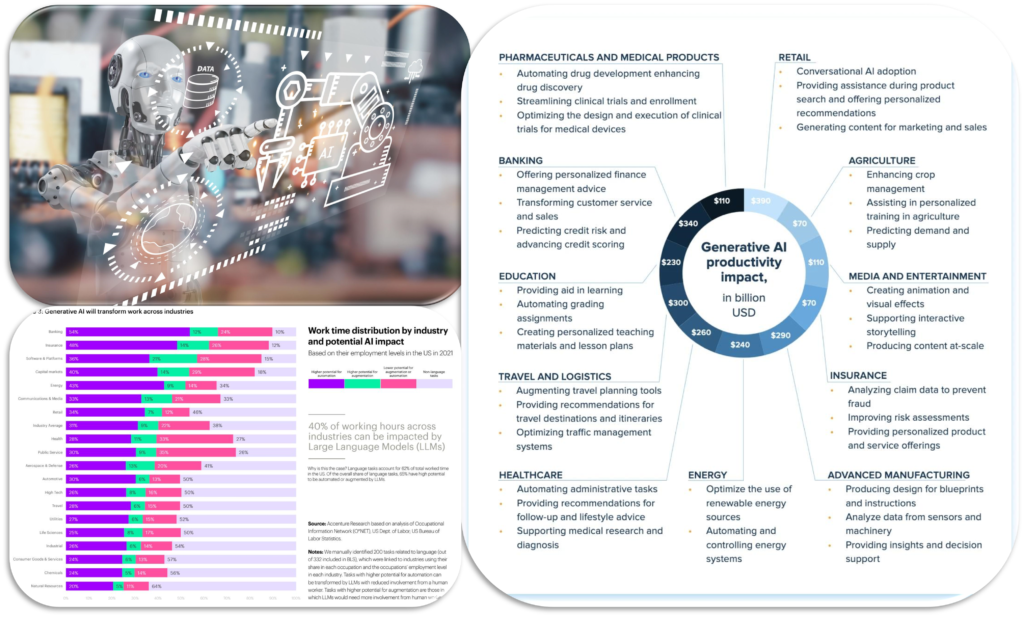
The impact of AI varies across industries, depending on the nature of tasks and level of digitization.
4.1 Technology Sector
AI-assisted coding tools have significantly increased developer productivity. While senior engineers remain in demand, the need for junior developers is declining.
4.2 Marketing and Content
Generative AI tools can produce articles, advertisements, and social media content at scale. This reduces reliance on large content teams.
4.3 Finance and Consulting
AI automates financial modeling, risk assessment, and reporting. Consultants increasingly use AI for research and analysis, reducing manual effort.
4.4 Legal and Administrative
Document review and contract analysis are being automated, impacting paralegal and administrative roles.
4.5 Industry Impact Table
| Industry | Impact Level | Key Changes |
|---|---|---|
| Technology | High | Reduced need for junior developers |
| Marketing | High | AI-generated content |
| Finance | Moderate to High | Automated analytics |
| Legal | Moderate | Document automation |
| Customer Support | High | Chatbots and virtual agents |
5. The Productivity Paradox
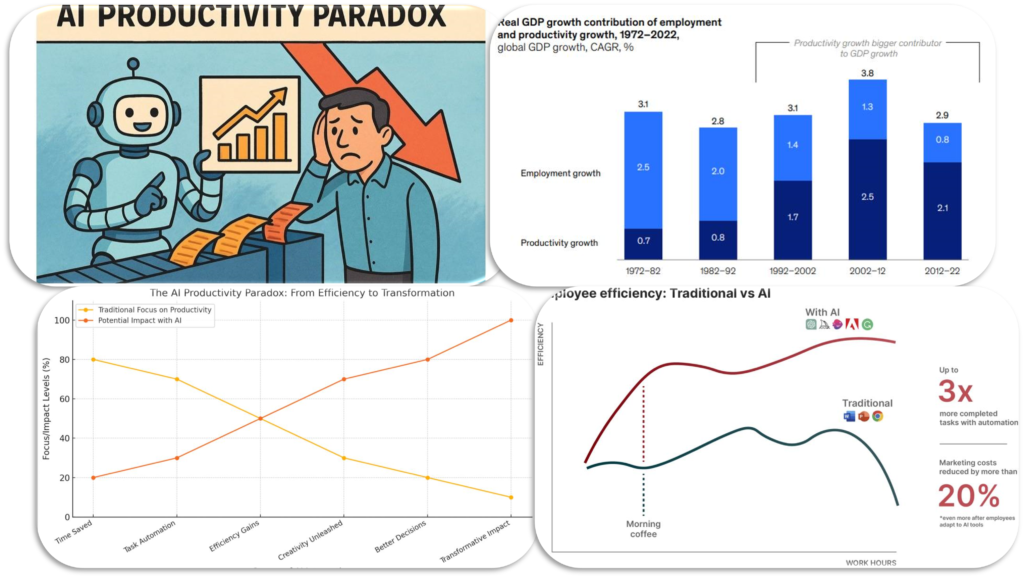
AI has significantly increased productivity, but this has not translated into proportional job growth.
5.1 Explanation
When productivity increases, fewer workers are needed to produce the same output. This leads to reduced hiring or workforce downsizing.
5.2 Economic Interpretation
| Factor | Impact |
|---|---|
| Productivity increase | Higher output per worker |
| Cost reduction | Improved margins |
| Labor demand | Decreases |
| Profitability | Increases |
5.3 Strategic Insight
Organizations prioritize efficiency and cost optimization. As a result, productivity gains often lead to workforce consolidation rather than expansion.
6. Organizational Transformation
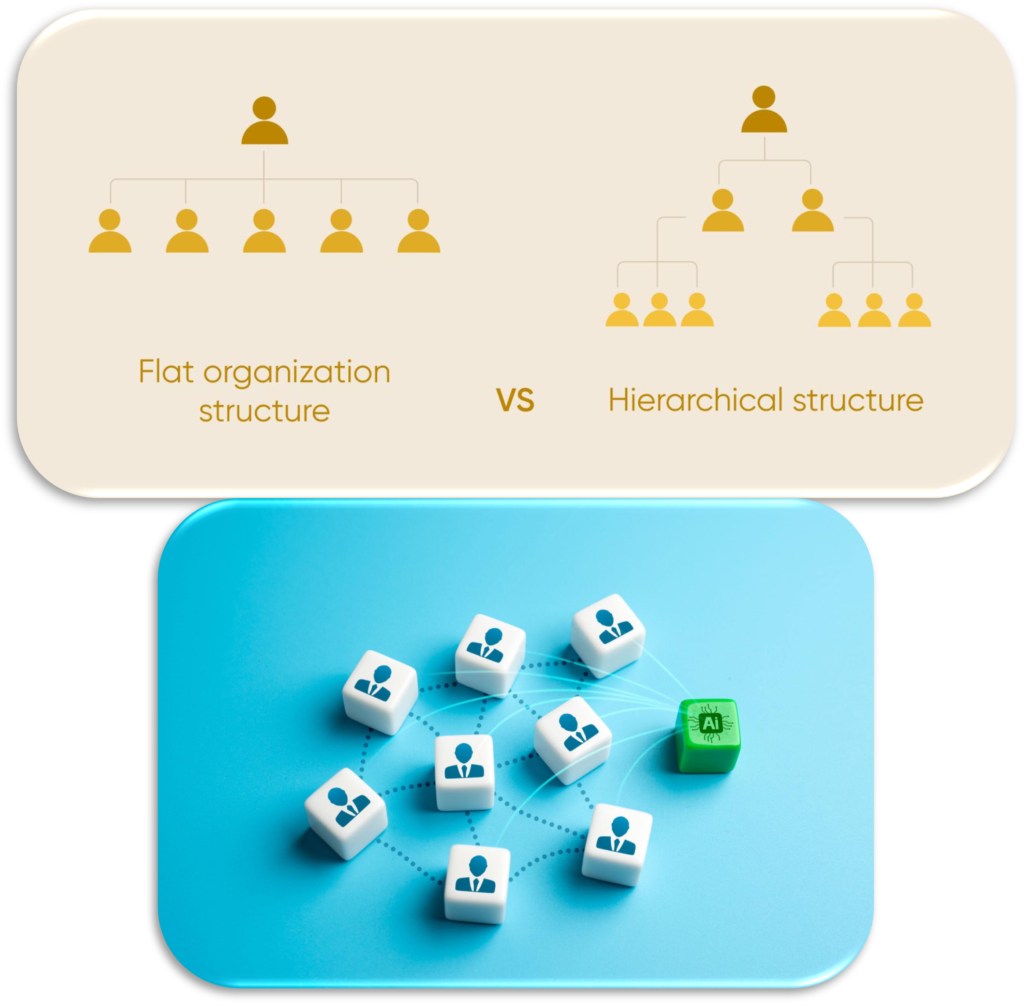
Organizations are undergoing structural changes to integrate AI effectively.
6.1 Leaner Teams
Companies are reducing team sizes while maintaining or increasing output.
6.2 AI-Augmented Roles
Employees are expected to work alongside AI tools, enhancing productivity and decision-making.
6.3 Organizational Model Comparison
| Traditional Model | AI-Driven Model |
|---|---|
| Hierarchical | Flat and agile |
| Role-based | Task-based |
| Human-centric | Human-AI collaboration |
7. Skills Shift and Workforce Evolution
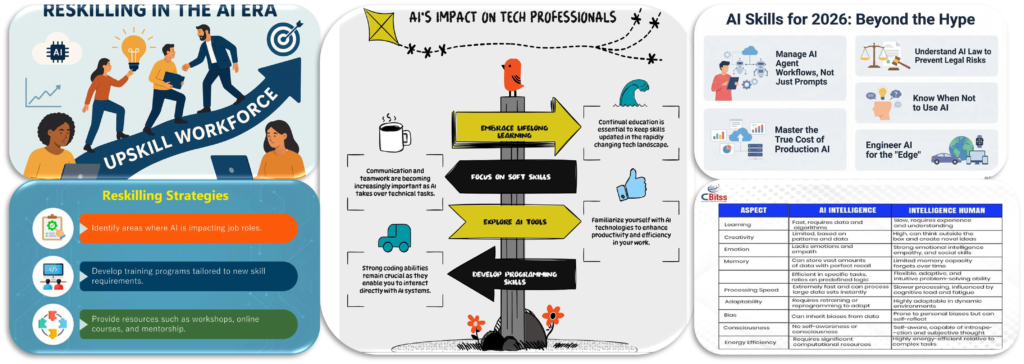
The demand for skills is shifting from routine expertise to adaptability and strategic thinking.
7.1 Emerging Skill Categories
- AI literacy
- Critical thinking
- Cross-functional knowledge
- Emotional intelligence
7.2 Skills Comparison Table
| Skill Type | Importance (Past) | Importance (Future) |
|---|---|---|
| Technical specialization | High | Moderate |
| AI proficiency | Low | High |
| Strategic thinking | Moderate | High |
| Communication | Moderate | High |
8. Psychological and Social Impact
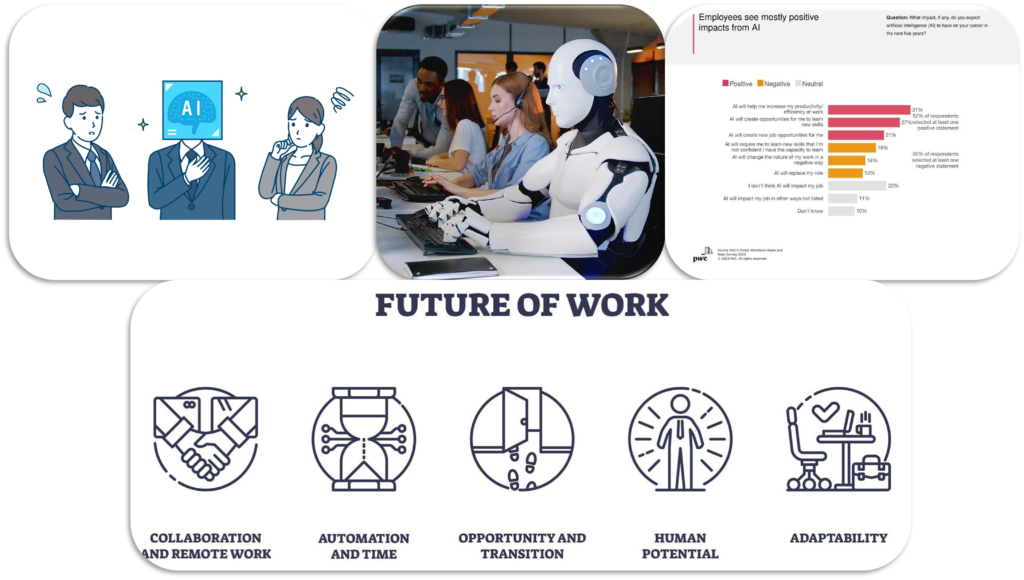
The impact of AI extends beyond economics into psychological and social dimensions.
8.1 Job Insecurity
Many professionals fear job loss or redundancy.
8.2 Identity Shift
Work is closely tied to identity. Changes in roles can lead to uncertainty and stress.
8.3 Social Implications
- Increased inequality
- Shifts in career preferences
- Rise of gig and freelance work
9. Strategic Recommendations
9.1 For Individuals
- Develop AI proficiency
- Focus on high-value tasks
- Build cross-functional skills
- Continuously learn and adapt
9.2 For Organizations
- Invest in reskilling programs
- Balance automation with human value
- Redesign roles for AI collaboration
- Maintain talent pipelines
9.3 Strategy Table
| Stakeholder | Key Action |
|---|---|
| Individuals | Upskill and adapt |
| Organizations | Redesign jobs |
| Governments | Policy and education reform |
10. Future Outlook
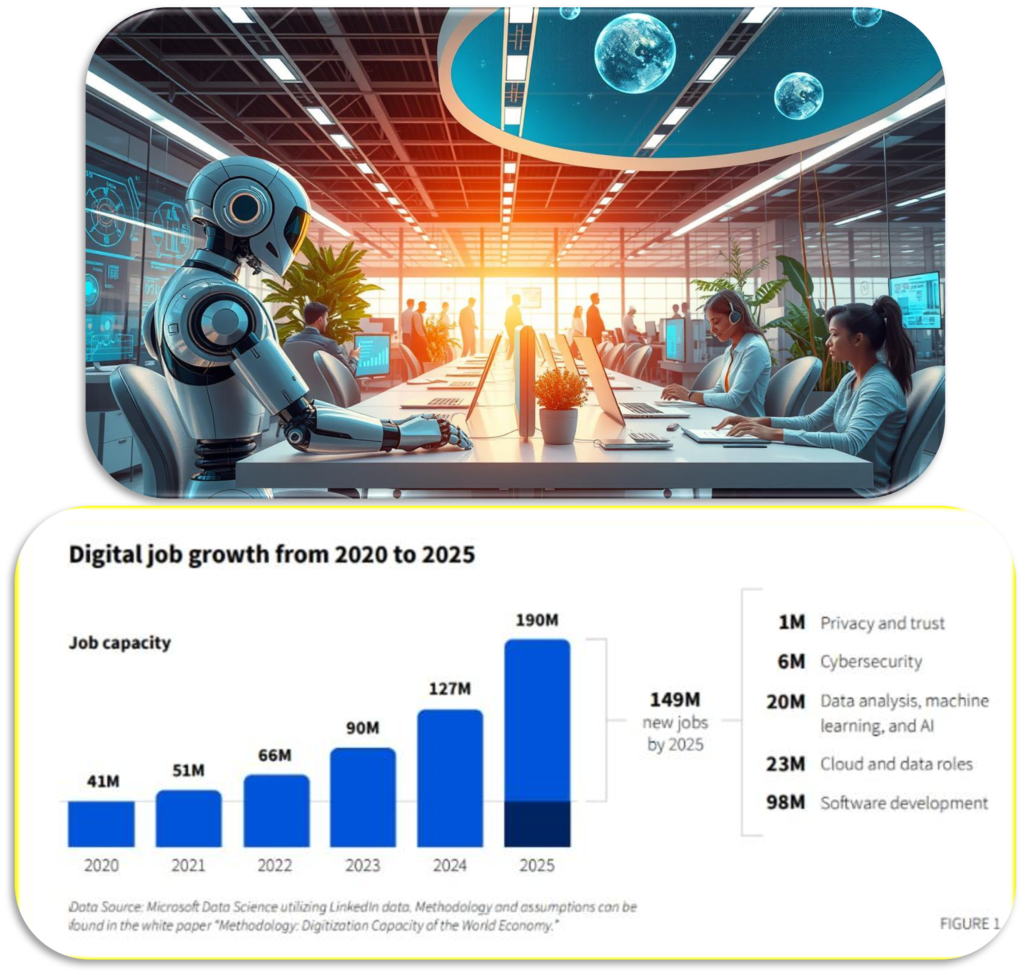
The future of work will be defined by human-AI collaboration rather than competition.
10.1 Key Trends
- AI-first organizations
- Portfolio careers
- Continuous learning
10.2 Long-Term Impact
While some jobs will disappear, new roles will emerge, particularly in AI management, ethics, and integration.
11. Conclusion
The narrative that AI is taking jobs from white-collar workers is both true and incomplete. AI is not merely replacing jobs. It is transforming the nature of work itself. The key challenge is not technological but strategic: how individuals and organizations adapt to this new reality.
The future will favor those who can leverage AI effectively, think strategically, and continuously evolve. Rather than resisting change, embracing it will be critical for long-term success.
12. References
- Autor, D. H. (2022). The labor market impacts of artificial intelligence. Journal of Economic Perspectives. https://www.aeaweb.org
- Brynjolfsson, E., & McAfee, A. (2017). Machine, platform, crowd. MIT Press. https://mitpress.mit.edu
- Frey, C. B., & Osborne, M. A. (2017). The future of employment. Technological Forecasting and Social Change. https://www.sciencedirect.com
- McKinsey Global Institute. (2023). The future of work in the age of AI. https://www.mckinsey.com
- World Economic Forum. (2023). Future of jobs report. https://www.weforum.org
- OECD. (2023). AI and employment outlook. https://www.oecd.org
- Harvard Business Review. (2024). AI and workforce transformation. https://hbr.org
- Goldman Sachs. (2023). AI and economic growth. https://www.goldmansachs.com
13. Disclaimer
This report is intended for informational and educational purposes only. The analysis is based on publicly available data, industry trends, and strategic interpretation. While efforts have been made to ensure accuracy and reliability, no guarantees are provided regarding completeness or future outcomes.
The views expressed are analytical in nature and do not constitute financial, legal, or career advice. Readers are encouraged to conduct independent research and consult relevant professionals before making decisions based on this report.
Technological developments, particularly in artificial intelligence, are evolving rapidly. As such, the insights presented may change over time. The author and publisher are not responsible for any direct or indirect consequences arising from the use of this information.