Abstract
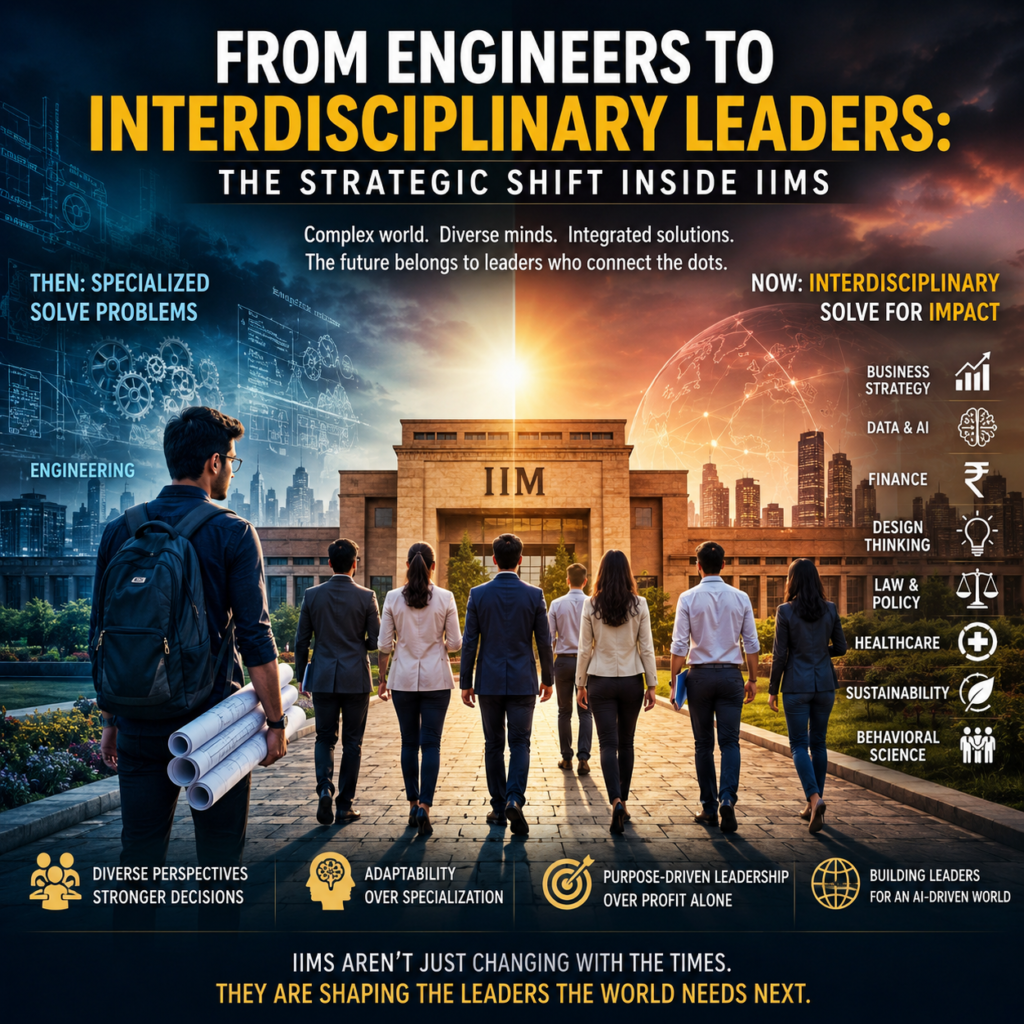
For more than three decades, engineering graduates have dominated admissions into India’s premier management institutions and subsequently occupied a disproportionate share of leadership positions across consulting, manufacturing, technology, banking, and multinational corporations. This trend was largely driven by the analytical rigor, quantitative aptitude, and problem-solving orientation associated with engineering education. However, the emergence of artificial intelligence, rapid digital transformation, changing consumer behavior, sustainability imperatives, and increasingly interconnected global markets is fundamentally altering the competencies that organizations seek in future leaders.
India’s leading management institutions are responding to these structural changes by embracing greater academic diversity in their classrooms. Organizations are simultaneously broadening their recruitment strategies to include graduates from commerce, economics, law, medicine, design, architecture, liberal arts, agriculture, and other disciplines. Rather than signaling a decline in the relevance of engineering, this transition reflects a recognition that modern business challenges require multidisciplinary thinking and leadership capabilities that extend beyond technical expertise.
This white paper examines the strategic forces driving this transformation and explores why organizations are redesigning their talent strategies for the AI era. It presents an original analytical perspective on how interdisciplinary leadership is becoming a competitive advantage, evaluates the implications for management education and corporate hiring, and proposes a strategic framework for preparing future business leaders capable of navigating increasingly complex economic and technological environments.
Executive Summary
The Indian corporate landscape is experiencing one of the most significant shifts in executive talent strategy since the liberalization of the economy in 1991. For decades, engineering graduates represented the preferred talent pool for premier management institutions and corporate recruiters because industrial growth depended primarily on technical competence, operational excellence, and quantitative decision-making. That model is now evolving.
Organizations no longer compete solely through manufacturing efficiency or technological superiority. Competitive advantage increasingly depends upon innovation, customer experience, digital ecosystems, sustainability, regulatory intelligence, behavioral understanding, and strategic agility. Artificial intelligence has accelerated this transformation by automating many technical and analytical tasks that previously differentiated engineering graduates. As AI democratizes access to technical knowledge, organizations are assigning greater value to creativity, contextual judgment, communication, leadership, and interdisciplinary collaboration.
This shift is reshaping management education. India’s premier business schools are consciously building academically diverse classrooms to mirror the complexity of contemporary organizations. Recruiters similarly recognize that multidisciplinary leadership teams generate broader perspectives, challenge conventional assumptions, and produce more innovative solutions than homogeneous groups with similar educational backgrounds.
The transformation should not be interpreted as a reduction in the importance of engineering education. Engineering remains one of the strongest foundations for analytical thinking and systems design. Rather, organizations are acknowledging that technical capability alone is insufficient to solve twenty-first century business challenges. Future leadership will increasingly depend upon integrating technological understanding with economic reasoning, consumer psychology, public policy, sustainability, financial literacy, design thinking, and organizational behavior.
The next decade will therefore reward professionals who combine deep expertise in one discipline with the ability to collaborate across many others. This emerging paradigm represents the foundation of interdisciplinary leadership.
Introduction
Every significant economic transformation reshapes the qualities that organizations value in their leaders. During the Industrial Revolution, engineering knowledge became indispensable because production systems depended upon machinery, infrastructure, and manufacturing efficiency. During the information technology revolution, software engineering and digital technologies became the engines of competitive advantage. Today, the world is entering another transformational era characterized by artificial intelligence, autonomous decision support systems, digital platforms, sustainability transitions, geopolitical uncertainty, and unprecedented business complexity.
Unlike previous industrial revolutions, the current transformation is not defined by the emergence of a single technology. Instead, it is characterized by the convergence of multiple technological, economic, environmental, and social forces that simultaneously influence how organizations create value. Decision-making has become multidimensional, requiring leaders to balance technological feasibility with financial viability, customer expectations, regulatory compliance, environmental responsibility, and societal impact.
These developments are compelling organizations to rethink traditional assumptions about leadership development. For several decades, engineering graduates naturally emerged as preferred candidates for management education because their academic training emphasized analytical reasoning, structured problem-solving, mathematical rigor, and operational discipline. These competencies aligned closely with the priorities of organizations focused on manufacturing expansion, infrastructure development, operational excellence, and technology implementation.
The contemporary business environment presents a substantially different reality. Organizations increasingly derive competitive advantage from understanding consumers rather than machines, ecosystems rather than individual products, and strategic integration rather than isolated functional excellence. Consequently, educational diversity is evolving from a desirable characteristic into a strategic necessity.
Business schools have recognized this transition earlier than many observers. Increasing classroom diversity across academic disciplines enables richer discussions, broader perspectives, and more realistic simulations of modern organizational decision-making. Corporate recruiters increasingly share this perspective because the composition of MBA classrooms ultimately shapes the composition of future executive leadership.
This transformation represents one of the most consequential developments in Indian management education since the establishment of the Indian Institutes of Management.
The Evolution of Corporate Hiring in India
Corporate recruitment has always reflected the dominant economic priorities of its time. During the 1990s, India witnessed rapid industrialization accompanied by substantial investments in manufacturing, telecommunications, infrastructure, and engineering services. Organizations required professionals capable of managing technical complexity, optimizing industrial operations, and implementing large-scale engineering projects.
As globalization accelerated during the early 2000s, multinational corporations expanded their operations across India, creating strong demand for engineers who could combine technical competence with managerial capability. Engineering graduates became particularly attractive candidates for MBA programs because they possessed quantitative aptitude, familiarity with analytical tools, and exposure to systematic problem-solving methodologies.
Management consulting firms reinforced this trend by recruiting extensively from engineering institutions. Strategy consulting, operations consulting, supply chain optimization, enterprise technology implementation, and business analytics all relied heavily upon structured analytical thinking. Engineering graduates demonstrated strong adaptability across these domains, further strengthening corporate preference.
However, the emergence of digital platforms, consumer technology, artificial intelligence, financial innovation, sustainability reporting, and experience-driven business models gradually expanded the scope of managerial responsibilities beyond traditional engineering competencies. Leadership increasingly required integrating insights from economics, behavioral science, design, psychology, environmental studies, law, and public policy.
The resulting transformation is evident across multiple industries.
| Economic Period | Dominant Business Priority | Preferred Corporate Talent |
| 1991–2000 | Industrial Expansion | Mechanical, Civil and Electrical Engineers |
| 2000–2010 | Globalization and IT Services | Engineers with MBA |
| 2010–2020 | Digital Transformation | Engineers, Analysts and Technology Specialists |
| 2020–2025 | Customer-Centric Innovation | Mixed Academic Backgrounds |
| 2025–2035 | AI-Driven Strategic Leadership | Interdisciplinary Business Leaders |
This evolution demonstrates that corporate hiring has consistently adapted to economic priorities. The growing diversity within management education therefore reflects structural changes in the economy rather than temporary recruitment preferences.
Why Engineering Dominated MBA Admissions for Three Decades
Understanding the present transformation requires understanding why engineering graduates dominated India’s premier management institutions for such an extended period.
Engineering education cultivated capabilities that aligned exceptionally well with organizational priorities during periods of industrial and technological expansion. Students received intensive training in mathematics, optimization, logical reasoning, systems analysis, operations, statistics, and quantitative decision-making. These competencies translated effectively into management consulting, manufacturing operations, supply chain management, finance, analytics, and corporate strategy.
Furthermore, engineering graduates generally demonstrated strong performance in quantitative entrance examinations. Competitive management admission tests rewarded mathematical reasoning, logical aptitude, and analytical thinking, naturally favoring candidates with engineering backgrounds. Over time, this created a reinforcing cycle in which engineering graduates secured a substantial proportion of admissions to leading management institutions, subsequently attracting recruiters who associated engineering education with managerial potential.
Corporate leaders also perceived engineering graduates as highly adaptable. An engineer could transition into marketing, finance, consulting, operations, analytics, or general management with relative ease because underlying analytical capabilities remained transferable across functional domains.
Another important factor was India’s economic composition. Manufacturing, automotive, heavy engineering, infrastructure, energy, industrial equipment, telecommunications, and information technology collectively represented major sources of employment and economic growth. These industries naturally valued technically competent managers capable of bridging engineering and business functions.
The historical dominance of engineering graduates was therefore both rational and economically justified. It reflected organizational priorities during a period when technical knowledge represented one of the strongest determinants of competitive advantage.
Yet competitive advantage rarely remains static.
The emergence of artificial intelligence, advanced automation, intelligent analytics, and multidisciplinary business ecosystems is fundamentally redefining the competencies required for executive leadership. Organizations are no longer searching only for individuals capable of solving complex technical problems. They increasingly seek leaders capable of integrating technological possibilities with customer expectations, regulatory developments, sustainability objectives, financial strategy, and human behavior.
The following sections examine the strategic forces that are accelerating this transition and explain why interdisciplinary leadership is emerging as the defining characteristic of successful organizations in the AI era.
Why Corporate India is Embracing Interdisciplinary Leadership
The transformation currently unfolding across India’s leading management institutions is fundamentally a reflection of changing corporate demand rather than changing educational philosophy. Business schools have historically responded to the evolving expectations of employers, governments, investors, and society. As organizations redefine the competencies required for leadership, management education inevitably adapts to produce graduates capable of meeting those expectations. The increasing representation of students from commerce, economics, law, medicine, humanities, architecture, design, agriculture, and pure sciences should therefore be interpreted as an economic response rather than an academic experiment.
Unlike previous decades, organizations today compete simultaneously across multiple dimensions. Financial performance remains important, but businesses must also address digital transformation, cybersecurity, customer experience, sustainability, geopolitical uncertainty, regulatory compliance, data privacy, stakeholder capitalism, supply chain resilience, and workforce transformation. These challenges cannot be solved through technical expertise alone. They require leaders capable of integrating insights from multiple disciplines while making decisions under conditions of uncertainty.
Artificial intelligence has accelerated this transition by fundamentally changing the relationship between technical expertise and competitive advantage. Many analytical tasks that once differentiated highly technical professionals are increasingly being performed by intelligent systems capable of generating code, analysing financial data, automating reporting, forecasting demand, optimizing logistics, and producing strategic scenarios within minutes. Consequently, the value created by human professionals is progressively shifting away from information processing toward interpretation, judgment, creativity, ethical reasoning, communication, and strategic decision-making.
This shift represents one of the most significant changes in executive capability requirements since the emergence of digital technologies during the early 2000s.
The Strategic Drivers Reshaping Corporate Hiring
Organizations rarely redesign recruitment strategies without compelling economic reasons. The increasing preference for academically diverse MBA graduates reflects structural transformations affecting nearly every major industry.
The first driver is the democratization of technical knowledge. Advances in artificial intelligence have significantly reduced barriers to acquiring technical capabilities. Tasks such as programming, financial modelling, market analysis, dashboard creation, data visualization, statistical interpretation, and documentation have become increasingly accessible through AI-powered platforms. Technical knowledge remains important, but it is no longer the exclusive source of organizational value creation.
The second driver is the increasing complexity of business ecosystems. Modern organizations operate within interconnected networks involving regulators, customers, suppliers, technology partners, governments, investors, environmental agencies, digital platforms, and global supply chains. Decisions made within one function often produce consequences across multiple domains, requiring leaders who understand broader business systems rather than isolated technical processes.
The third driver is innovation. Competitive advantage increasingly depends upon identifying unmet customer needs, designing new business models, integrating emerging technologies, and creating differentiated experiences. Innovation thrives where diverse perspectives intersect. Organizations therefore seek leadership teams composed of individuals with varied educational backgrounds because heterogeneous thinking consistently produces more creative solutions than homogeneous expertise.
The fourth driver involves changing consumer expectations. Customers increasingly evaluate organizations based on experience, trust, sustainability, transparency, personalization, and social responsibility in addition to product quality. Understanding these dimensions requires expertise extending beyond engineering into psychology, economics, behavioral science, sociology, communication, and design.
The fifth driver is regulatory expansion. Corporate governance, ESG reporting, climate disclosures, digital privacy regulations, artificial intelligence governance, and international compliance frameworks require leaders capable of integrating legal, ethical, financial, technological, and operational considerations simultaneously.
Collectively, these developments explain why recruiters increasingly value interdisciplinary management capability.
| Strategic Driver | Traditional Competitive Advantage | Emerging Competitive Advantage |
| Technology | Engineering Expertise | AI-Augmented Decision Making |
| Operations | Process Optimization | Business Ecosystem Integration |
| Marketing | Product Promotion | Customer Experience Strategy |
| Finance | Reporting Accuracy | Strategic Capital Allocation |
| Innovation | Technical Development | Cross-Functional Collaboration |
| Leadership | Functional Expertise | Interdisciplinary Judgment |
| Growth | Scale | Adaptability and Agility |
Artificial Intelligence and the Declining Monopoly of Technical Advantage
Artificial intelligence should not be viewed as replacing engineers. Instead, AI is reducing the exclusivity of technical knowledge as a competitive differentiator.
Historically, technical specialists created value because they possessed scarce expertise. Organizations depended upon their ability to perform sophisticated calculations, design complex systems, analyse operational data, and solve mathematical problems beyond the capabilities of most business professionals.
Generative AI fundamentally changes this equation.
Programming assistance, predictive analytics, financial forecasting, optimization algorithms, process automation, visualization tools, and intelligent reporting platforms are increasingly available to professionals irrespective of their academic backgrounds. Consequently, the scarcity of technical execution is gradually declining.
Scarcity is shifting toward strategic thinking.
Organizations increasingly reward individuals capable of asking insightful questions rather than merely generating accurate answers. Decision-makers who understand customers, interpret economic signals, anticipate regulatory developments, negotiate stakeholder interests, inspire teams, manage organizational change, and formulate long-term strategies create greater organizational value than professionals focused exclusively on technical execution.
This transition represents a profound change in managerial economics.
During the industrial economy, organizations rewarded execution.
During the digital economy, organizations rewarded analysis.
During the AI economy, organizations increasingly reward judgment.
This distinction explains why educational diversity is becoming strategically valuable.
| Business Era | Primary Human Value |
| Industrial Economy | Technical Execution |
| Information Economy | Data Analysis |
| Digital Economy | Technology Integration |
| AI Economy | Strategic Judgment and Leadership |
The organizations that recognize this transition earliest are likely to enjoy significant competitive advantages in attracting, developing, and retaining future leaders.
The Rise of Interdisciplinary Leadership
Leadership has evolved substantially over the past four decades.
Traditional organizations generally promoted specialists into management positions because competitive advantage depended upon operational excellence within individual business functions. Manufacturing organizations promoted production engineers. Banks promoted finance professionals. Pharmaceutical companies promoted scientists. Technology firms promoted software engineers.
While technical competence remains essential, executive leadership increasingly requires integrating multiple knowledge domains rather than maximizing expertise within a single discipline.
The Chief Executive Officer of a multinational corporation today simultaneously addresses artificial intelligence adoption, investor expectations, cybersecurity, geopolitical risks, sustainability commitments, workforce transformation, customer experience, digital disruption, regulatory compliance, mergers and acquisitions, and long-term capital allocation.
Few of these responsibilities can be understood through engineering education alone.
Similarly, they cannot be understood through finance alone, marketing alone, law alone, or economics alone.
Modern executive leadership therefore depends upon interdisciplinary integration rather than disciplinary specialization.
Organizations increasingly recognize that educational diversity improves executive decision quality because different academic backgrounds naturally examine problems through different intellectual frameworks.
Economists analyse incentives.
Lawyers examine regulatory implications.
Designers emphasize customer experience.
Psychologists interpret behavioral responses.
Doctors understand healthcare systems.
Engineers optimize processes.
Commerce graduates evaluate financial performance.
Public policy specialists anticipate institutional consequences.
When these perspectives converge, organizations produce decisions that are simultaneously more innovative, more resilient, and more sustainable.
This principle increasingly influences leadership succession planning across global corporations.
Why Academic Diversity Improves Organizational Performance
Research across organizational behavior, innovation management, and strategic leadership consistently demonstrates that cognitive diversity enhances decision quality when managed effectively.
Academic diversity contributes to cognitive diversity because educational experiences shape how individuals define problems, interpret evidence, evaluate uncertainty, and generate solutions.
Engineering education encourages optimization.
Economics encourages trade-off analysis.
Law emphasizes compliance and institutional structure.
Medicine prioritizes diagnosis and evidence.
Psychology focuses upon human behavior.
Design emphasizes user experience.
Business education integrates commercial value creation.
The convergence of these perspectives creates richer strategic discussions than any single discipline could produce independently.
Organizations increasingly compete within environments characterized by ambiguity rather than certainty. Under such conditions, diverse leadership teams generally outperform homogeneous teams because they challenge assumptions, identify hidden risks, explore alternative scenarios, and reduce groupthink.
Innovation similarly depends upon combining unrelated ideas rather than refining existing knowledge.
Many of the world’s most disruptive innovations emerged from interdisciplinary collaboration rather than disciplinary specialization.
This reality explains why global corporations increasingly recruit leadership talent from increasingly diverse educational backgrounds.
| Educational Background | Distinct Strategic Contribution |
| Engineering | Systems Thinking and Optimization |
| Commerce | Financial Management and Business Operations |
| Economics | Market Analysis and Policy Interpretation |
| Law | Governance, Regulation and Risk Management |
| Medicine | Evidence-Based Decision Making and Healthcare Innovation |
| Design | Customer Experience and Product Innovation |
| Humanities | Communication, Ethics and Critical Thinking |
| Agriculture | Sustainability and Food Systems |
| Architecture | Urban Development and Design Integration |
| Science | Research Methodology and Innovation |
The future organization is therefore unlikely to be dominated by any single academic discipline.
Instead, competitive advantage will increasingly emerge from the intelligent integration of multiple disciplines working toward common strategic objectives.
The Transformation of Management Education
Business schools have always functioned as institutions preparing future leaders rather than reinforcing existing organizational structures.
As industries evolve, management education evolves accordingly.
The emergence of artificial intelligence, digital transformation, ESG investing, climate adaptation, stakeholder capitalism, and global business ecosystems has significantly expanded the competencies expected from MBA graduates.
Leading management institutions increasingly recognize that classroom diversity strengthens peer learning because students contribute experiences drawn from different academic traditions.
A discussion involving engineers, economists, doctors, lawyers, entrepreneurs, architects, designers, and commerce graduates more accurately reflects real boardroom deliberations than one dominated by a single educational background.
Consequently, academic diversity improves not only recruitment outcomes but also educational quality itself.
The transformation occurring within management education therefore reflects strategic adaptation rather than philosophical preference.
The business school of the future will increasingly resemble the organizations its graduates are expected to lead: technologically sophisticated, globally connected, intellectually diverse, customer-centric, ethically responsible, and strategically integrated.
Global Perspective: How the World’s Leading Business Schools Have Already Embraced Academic Diversity
The transformation taking place in Indian management education is not occurring in isolation. It represents part of a broader global evolution in leadership development that has been unfolding for more than two decades. The world’s highest-ranked business schools have progressively moved away from admitting cohorts dominated by any single academic discipline. Instead, they intentionally build academically diverse classrooms that mirror the complexity of modern organizations and prepare graduates to solve multidimensional business challenges.
Institutions such as Harvard Business School, Stanford Graduate School of Business, The Wharton School, MIT Sloan School of Management, INSEAD, London Business School, Oxford Saïd Business School, and Cambridge Judge Business School consistently enroll students representing engineering, economics, commerce, law, medicine, military service, public administration, architecture, education, psychology, sciences, arts, journalism, and entrepreneurship. Their admission philosophy reflects a simple yet powerful principle: organizations do not succeed because everyone thinks alike; they succeed because diverse expertise is integrated into coherent strategic decisions.
This philosophy has significantly influenced corporate recruitment across North America, Europe, and Asia-Pacific. Global corporations increasingly seek executives capable of understanding technology without being limited by technology, appreciating finance without being constrained by financial metrics, and leading organizations through uncertainty rather than merely managing operational efficiency.
India’s premier management institutions are increasingly aligning with this internationally accepted model of executive education.
| Global Business School | Academic Diversity Philosophy | Strategic Objective |
| Harvard Business School | Diverse professional and academic backgrounds | Leadership through multiple perspectives |
| Stanford Graduate School of Business | Innovation across disciplines | Entrepreneurial leadership |
| The Wharton School | Broad educational representation | Evidence-based decision making |
| MIT Sloan | Technology integrated with management | Innovation and transformation |
| INSEAD | International and multidisciplinary diversity | Global leadership |
| London Business School | Cross-sector learning | Strategic adaptability |
| Oxford Saïd | Policy, technology and business integration | Responsible leadership |
| Cambridge Judge | Research and innovation orientation | Future-focused management |
The global evidence demonstrates that educational diversity has become a defining characteristic of elite management education rather than an experimental initiative. The increasing representation of non-engineering graduates within Indian management institutions should therefore be viewed as convergence with international best practices rather than divergence from traditional educational models.
Industry Analysis: Why Different Sectors Are Expanding Their Talent Preferences
Corporate hiring strategies are ultimately determined by industry economics. Organizations recruit the capabilities required to compete successfully within their respective markets. As industries become increasingly knowledge-intensive and interconnected, their leadership requirements naturally become more interdisciplinary.
Management consulting firms provide one of the clearest illustrations of this evolution. Earlier consulting assignments focused heavily on operational efficiency, manufacturing optimization, cost reduction, process improvement, and information technology implementation. Engineers naturally excelled in these assignments because analytical rigor and quantitative modelling formed the foundation of consulting engagements.
The consulting industry now advises organizations on digital transformation, artificial intelligence adoption, ESG strategy, organizational restructuring, customer experience, healthcare reform, public policy, climate transition, geopolitical risk, mergers and acquisitions, and ecosystem development. These engagements require multidisciplinary expertise extending well beyond engineering.
Healthcare organizations illustrate a similar transformation. Traditional hospital administration focused primarily on operational management and infrastructure planning. Modern healthcare systems increasingly integrate digital diagnostics, biotechnology, pharmaceutical regulation, public health policy, insurance economics, patient behavior, medical ethics, artificial intelligence, and precision medicine. Effective leadership therefore requires collaboration among clinicians, economists, lawyers, engineers, technologists, and management professionals.
The banking and financial services industry has undergone an equally profound transition. Financial institutions now compete through digital platforms, cybersecurity, customer experience, regulatory technology, behavioral finance, sustainable investing, data governance, and embedded finance. Leadership increasingly depends upon understanding economics, technology, psychology, public policy, compliance, and risk management simultaneously.
Manufacturing continues to value engineering excellence but increasingly integrates sustainability reporting, circular economy principles, smart factories, predictive analytics, supply chain resilience, digital twins, industrial artificial intelligence, and global trade policy. Consequently, manufacturing organizations increasingly recruit managers capable of integrating engineering with strategy, finance, environmental science, and international business.
Consumer goods organizations have experienced perhaps the most dramatic transformation. Traditional marketing centered on product features and distribution efficiency. Contemporary consumer markets are driven by digital communities, personalization, behavioral insights, omnichannel commerce, sustainability expectations, and experience design. These developments require interdisciplinary leadership combining commerce, psychology, economics, communication, design, analytics, and technology.
| Industry | Traditional Leadership Focus | Emerging Leadership Focus |
| Consulting | Process Improvement | Enterprise Transformation |
| Manufacturing | Operational Excellence | Smart and Sustainable Manufacturing |
| Banking | Financial Management | Digital Financial Ecosystems |
| Healthcare | Hospital Administration | Integrated Healthcare Innovation |
| Consumer Goods | Distribution | Consumer Experience and Behavioral Insights |
| Technology | Product Development | Platform Ecosystems and Responsible AI |
| Energy | Asset Management | Energy Transition and Sustainability |
| Retail | Sales Management | Omnichannel Customer Strategy |
Across sectors, the common denominator remains remarkably consistent. Organizations increasingly reward leaders capable of connecting knowledge domains rather than optimizing individual functions.
The AI Economy and the Emergence of Human-Centric Leadership
Artificial intelligence represents far more than another technological innovation. It fundamentally changes the economic value of human capability.
Previous technological revolutions primarily automated physical labor. Artificial intelligence increasingly automates cognitive tasks involving calculation, classification, prediction, documentation, pattern recognition, and routine analysis. Consequently, organizations are redefining the activities for which human professionals create distinctive value.
Human value increasingly resides in interpretation rather than computation.
Judgment rather than calculation.
Creativity rather than repetition.
Leadership rather than supervision.
Empathy rather than automation.
Ethical reasoning rather than algorithmic optimization.
This transformation has profound implications for management education.
Future executives will increasingly collaborate with artificial intelligence rather than compete against it. AI systems will provide extensive analytical capabilities, but executive leaders will remain responsible for defining organizational purpose, resolving ethical dilemmas, balancing stakeholder interests, allocating capital, inspiring people, negotiating partnerships, and navigating uncertainty.
These responsibilities depend upon interdisciplinary understanding because organizational decisions increasingly produce consequences across economic, technological, environmental, legal, and social dimensions simultaneously.
The executive of the future therefore resembles an orchestrator rather than a specialist.
Success will increasingly depend upon integrating diverse expertise into coherent organizational strategy.
This emerging leadership model explains why organizations increasingly evaluate MBA graduates based upon adaptability, curiosity, collaboration, communication, strategic thinking, and learning agility in addition to analytical capability.
An Original Strategic Framework: The Interdisciplinary Leadership Matrix™
The evolution of corporate hiring can be understood through a simple but powerful strategic framework referred to as the Interdisciplinary Leadership Matrix™. The framework argues that organizational complexity and leadership effectiveness increase proportionately with the breadth of knowledge integration rather than with technical specialization alone.
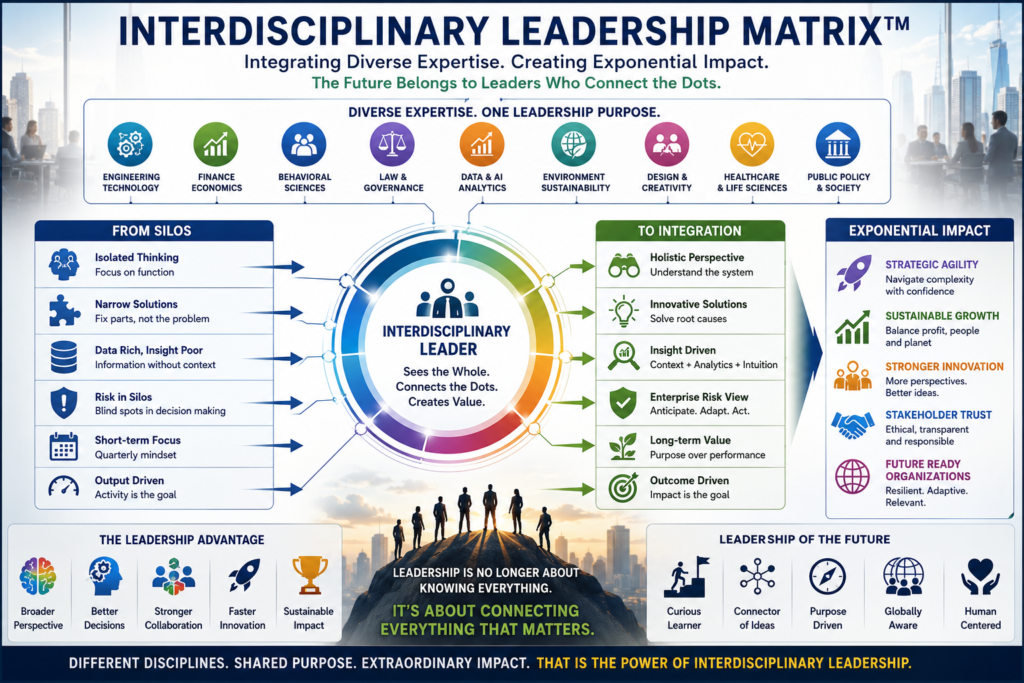
| Leadership Dimension | Single-Discipline Leader | Interdisciplinary Leader |
| Decision Making | Function-specific | Enterprise-wide |
| Innovation | Incremental | Transformational |
| Risk Assessment | Departmental | Systemic |
| Customer Understanding | Limited | Holistic |
| AI Adoption | Technology Focused | Business Value Focused |
| Sustainability | Compliance Driven | Strategic Opportunity |
| Communication | Technical Language | Stakeholder-Centric |
| Organizational Impact | Functional Performance | Enterprise Value Creation |
The framework illustrates that technical expertise remains indispensable but becomes significantly more valuable when integrated with complementary knowledge domains. Engineering, finance, economics, law, design, behavioral science, and strategy should therefore be viewed as mutually reinforcing capabilities rather than competing educational pathways.
Organizations that intentionally cultivate interdisciplinary leadership are likely to demonstrate greater resilience, stronger innovation capacity, superior customer understanding, and more effective long-term strategic execution.
The Future CEO Competency Pyramid™
Leadership requirements are undergoing structural change as organizations transition into the AI economy. The competencies that differentiated executives during the industrial and digital eras continue to matter, but they no longer represent sufficient conditions for sustained competitive advantage.
The proposed Future CEO Competency Pyramid™ identifies the hierarchy of executive capability expected to define organizational leadership over the next decade.
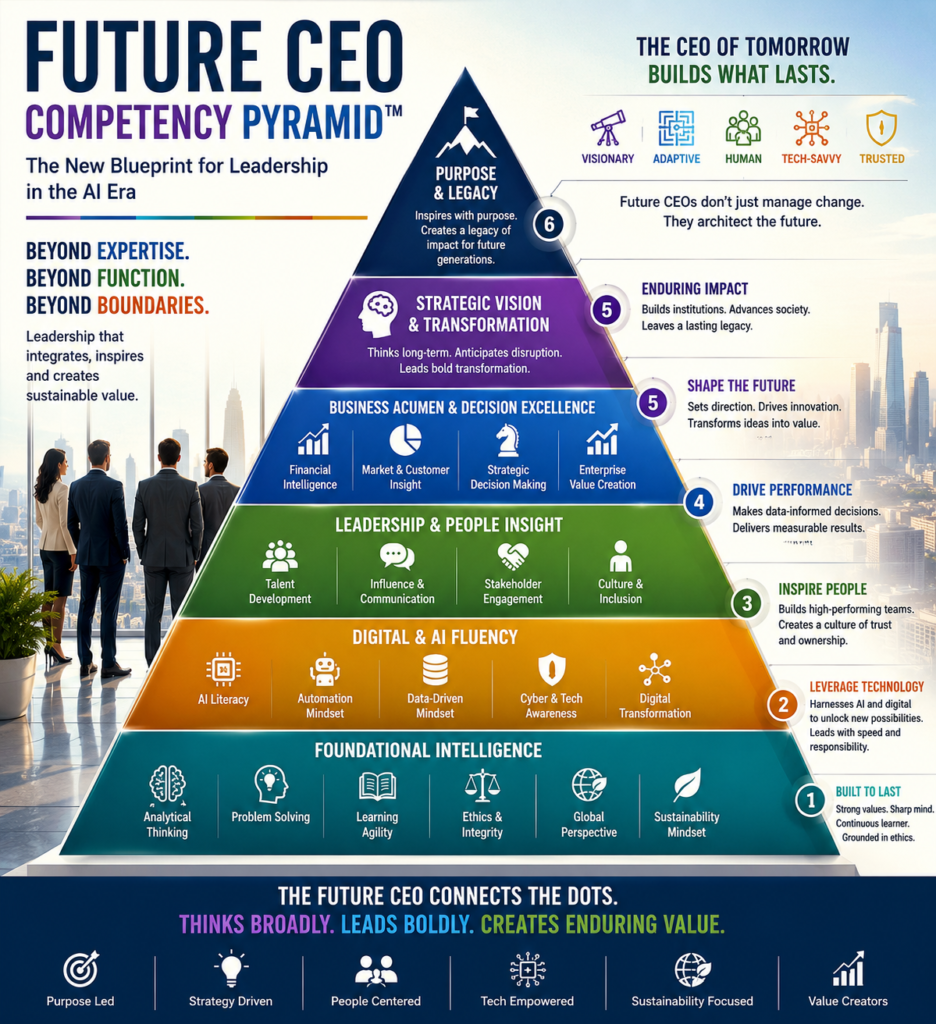
| Competency Layer | Strategic Importance |
| AI Literacy and Digital Fluency | Understanding technological possibilities |
| Functional Expertise | Credibility within the chosen domain |
| Financial and Commercial Acumen | Sustainable value creation |
| Cross-Functional Integration | Enterprise coordination |
| Strategic Thinking | Long-term competitive positioning |
| Ethical Judgment | Responsible governance |
| Visionary Leadership | Organizational transformation |
The pyramid demonstrates that leadership increasingly progresses upward from technical competence toward enterprise judgment. Artificial intelligence strengthens the lower layers by enhancing productivity but simultaneously elevates the importance of uniquely human capabilities occupying the upper layers.
This evolution reinforces a central argument of this white paper: the future belongs not to the most technically specialized leaders, nor to the most generalized managers, but to professionals capable of integrating deep expertise with broad strategic understanding.
The concluding section of this paper examines the implications of this transformation for engineering graduates, non-engineering students, business schools, corporations, policymakers, and boards of directors, while presenting a forward-looking assessment of how India’s leadership landscape is likely to evolve through 2035.
Strategic Implications for Engineering Graduates
The increasing academic diversity within management education should not be interpreted as diminishing the importance of engineering. Such an interpretation would overlook the broader structural transformation taking place within organizations. Engineering remains one of the strongest foundations for analytical thinking, systems design, operational excellence, and technological innovation. What is changing is the composition of leadership capability rather than the value of engineering itself.
Engineering graduates continue to possess significant competitive advantages in industries such as manufacturing, aerospace, automotive, infrastructure, industrial automation, semiconductors, renewable energy, robotics, telecommunications, and software engineering. However, these advantages increasingly represent the starting point rather than the destination of leadership development.
Corporate leadership today requires engineers to complement technical competence with commercial awareness, customer understanding, financial literacy, communication excellence, organizational behavior, geopolitical awareness, and strategic thinking. The engineer who successfully integrates these capabilities becomes substantially more valuable than one whose expertise remains confined to technical execution.
Artificial intelligence further amplifies this reality. AI-powered tools increasingly automate coding, simulation, optimization, documentation, reporting, predictive analytics, and operational monitoring. Consequently, organizations are shifting their evaluation criteria toward professionals capable of interpreting AI-generated insights, making strategic decisions, leading organizational transformation, and creating sustainable competitive advantage.
The future engineer therefore evolves from problem solver to enterprise strategist.
This evolution creates significant opportunities rather than threats for engineering graduates willing to embrace interdisciplinary learning.
| Traditional Engineering Career | Emerging Engineering Leadership |
| Technical Specialist | Business Technologist |
| Project Engineer | Transformation Leader |
| Operations Manager | Enterprise Strategist |
| Product Developer | Innovation Architect |
| Manufacturing Expert | Digital Manufacturing Leader |
| Process Optimizer | Business Value Creator |
Engineering education remains a powerful intellectual foundation. However, its long-term value increasingly depends upon continuous integration with management, economics, finance, behavioral science, sustainability, and leadership.
Strategic Implications for Non-Engineering Graduates
The evolving recruitment landscape creates unprecedented opportunities for graduates from commerce, economics, law, medicine, architecture, design, psychology, humanities, agriculture, sciences, and public policy.
Historically, many of these disciplines were perceived as less competitive during MBA admissions because management education emphasized quantitative aptitude and technical analysis. The contemporary economy, however, increasingly rewards precisely the capabilities these disciplines cultivate.
Economics graduates understand incentives, markets, macroeconomic dynamics, and public policy.
Commerce graduates possess financial literacy, accounting knowledge, taxation expertise, and commercial awareness.
Law graduates contribute regulatory understanding, governance, compliance, negotiation, and institutional thinking.
Medical professionals understand healthcare systems, evidence-based decision making, diagnostics, and patient-centered innovation.
Design professionals contribute customer empathy, creativity, user experience, and product innovation.
Psychology graduates interpret human behavior, organizational culture, motivation, and consumer decision-making.
Agriculture specialists contribute expertise regarding sustainability, food security, climate adaptation, and resource management.
Each discipline contributes strategic capabilities increasingly relevant to contemporary organizations.
However, interdisciplinary leadership also requires these graduates to strengthen competencies in analytics, artificial intelligence, digital technologies, financial decision-making, strategic management, and business communication.
Future organizational success will depend not upon replacing one discipline with another but upon integrating complementary capabilities across diverse educational backgrounds.
The Corporate Perspective: Building Leadership Teams for Business Complexity
Leading organizations increasingly recognize that future competitive advantage depends upon organizational adaptability rather than functional specialization.
Business complexity has increased dramatically during the past decade. Decisions regarding artificial intelligence affect employment, ethics, regulation, customer trust, cybersecurity, and capital allocation simultaneously. Sustainability initiatives influence operations, finance, investor relations, supply chains, product design, and corporate reputation. Digital transformation affects technology infrastructure, workforce capabilities, organizational culture, customer experience, and governance.
No single academic discipline adequately addresses all these dimensions.
Consequently, organizations increasingly construct leadership teams that deliberately combine diverse educational experiences.
This approach improves strategic decision quality by reducing cognitive bias, encouraging constructive debate, identifying emerging risks, and expanding innovation potential.
Boardrooms increasingly require directors capable of interpreting technological disruption, financial markets, geopolitical developments, environmental regulations, demographic shifts, and stakeholder expectations simultaneously.
Academic diversity therefore contributes directly to stronger corporate governance.
Organizations capable of integrating multidisciplinary leadership are likely to demonstrate greater resilience during periods of uncertainty because they possess broader analytical perspectives and greater strategic flexibility.
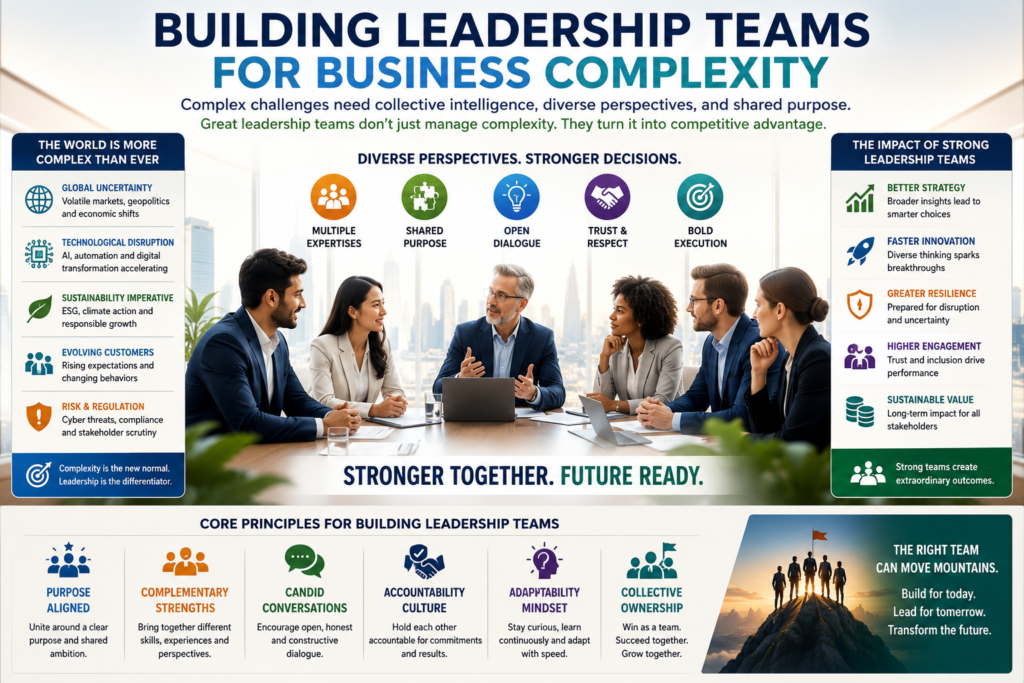
| Leadership Attribute | Homogeneous Teams | Interdisciplinary Teams |
| Problem Definition | Similar Perspective | Multiple Perspectives |
| Innovation | Incremental Improvement | Breakthrough Opportunities |
| Strategic Planning | Functional Focus | Enterprise Integration |
| Risk Assessment | Narrow Analysis | Comprehensive Evaluation |
| Customer Understanding | Product Orientation | Ecosystem Orientation |
| Organizational Learning | Moderate | High |
| Adaptability | Limited | Strong |
Corporate recruitment is therefore evolving beyond educational labels toward capability portfolios.
Organizations increasingly evaluate candidates according to their capacity for continuous learning, interdisciplinary collaboration, digital fluency, strategic reasoning, ethical judgment, and leadership potential.
Strategic Recommendations
The transformation of management education and corporate recruitment carries significant implications for educational institutions, policymakers, organizations, and professionals.
Business schools should continue strengthening academic diversity while simultaneously ensuring that every graduate develops analytical capability, AI literacy, financial understanding, strategic thinking, and leadership competence. Diversity should enhance educational quality rather than reduce academic rigor.
Engineering institutions should expand curricula to include economics, communication, organizational behavior, entrepreneurship, sustainability, public policy, and strategic management. Engineers equipped with broader business capabilities will remain among the most competitive professionals globally.
Universities representing commerce, economics, humanities, law, sciences, medicine, and design should strengthen quantitative reasoning, digital technologies, artificial intelligence, analytics, and financial literacy to complement existing domain expertise.
Organizations should redesign recruitment frameworks to evaluate adaptability, learning agility, strategic thinking, ethical leadership, and interdisciplinary collaboration instead of relying excessively upon academic pedigree alone.
Human resource leaders should increasingly prioritize capability-based hiring over degree-based hiring. Competency models should emphasize future leadership potential rather than historical educational preferences.
Boards of directors should encourage succession planning that deliberately develops executives with multidisciplinary exposure across operations, finance, technology, sustainability, governance, customer strategy, and innovation.
Policymakers should promote educational reforms encouraging collaboration between engineering institutions, business schools, law schools, design institutes, medical colleges, and research universities. Such collaboration will better prepare graduates for increasingly interconnected economies.
Future Outlook: The Next Decade of Management Education
India stands at the beginning of one of the most significant transformations in executive talent development since economic liberalization.
Artificial intelligence will continue automating repetitive analytical tasks while increasing demand for uniquely human capabilities involving leadership, creativity, judgment, collaboration, negotiation, communication, ethics, and strategic thinking.
Management education will progressively become more interdisciplinary as organizations seek executives capable of integrating technology with business strategy, sustainability with profitability, regulation with innovation, and customer experience with operational excellence.
Corporate recruitment will increasingly evaluate demonstrated competencies rather than undergraduate degrees in isolation.
The distinction between engineers and non-engineers will gradually become less relevant than the distinction between adaptive learners and static specialists.
Organizations will increasingly reward professionals capable of learning continuously, collaborating across disciplines, leveraging artificial intelligence responsibly, and leading organizational transformation under conditions of uncertainty.
Business schools that successfully cultivate such leaders will become strategic partners in national economic development.
Conclusion
India’s evolving management education landscape represents a strategic response to profound economic transformation rather than a departure from academic tradition. The growing representation of students from diverse educational backgrounds within premier management institutions reflects the changing realities of global business rather than declining confidence in engineering education.
Engineering will remain indispensable to technological innovation, industrial competitiveness, and economic growth. Nevertheless, the AI economy demands leaders who extend beyond technical expertise to integrate commercial understanding, customer insight, behavioral science, governance, sustainability, digital transformation, and strategic decision-making.
Organizations are therefore redefining leadership around interdisciplinary capability rather than disciplinary identity.
The future belongs neither to engineers alone nor to non-engineers alone. It belongs to professionals capable of combining deep domain expertise with broad business understanding, intellectual curiosity, continuous learning, ethical judgment, and collaborative leadership.
For India’s premier management institutions, this transformation represents an opportunity to develop leaders equipped for an increasingly interconnected world. For corporations, it represents a pathway toward stronger innovation, more resilient organizations, and superior long-term value creation. For professionals across every discipline, it signals that the most valuable qualification in the coming decade will not be a specific undergraduate degree but the ability to integrate knowledge across disciplines to solve complex business challenges.
The AI era is not eliminating specialization. It is elevating integration.
That distinction will define the next generation of business leadership.
References
- AACSB International. (2025). Business education intelligence and trends. Retrieved July 20, 2026, from https://www.aacsb.edu
- Brynjolfsson, E., & McAfee, A. (2017). The Second Machine Age: Work, Progress, and Prosperity in a Time of Brilliant Technologies. W. W. Norton & Company. https://wwnorton.com/books/the-second-machine-age/
- Economic Times. (2026, July 20). As things change, IIMs take a new course with engineering. Retrieved July 20, 2026, from https://economictimes.indiatimes.com/industry/services/education/as-things-change-iims-take-a-new-course-with-engineering/articleshow/132500934.cms
- Graduate Management Admission Council (GMAC). (2025). Prospective Students Survey Report. Retrieved July 20, 2026, from https://www.gmac.com
- Harvard Business Review. (2024). Leadership in the Age of Artificial Intelligence. Retrieved July 20, 2026, from https://hbr.org
- Kaplan, R. S., & Norton, D. P. (2008). The Execution Premium: Linking Strategy to Operations for Competitive Advantage. Harvard Business Review Press.
- McKinsey & Company. (2025). The State of Organizations 2025. Retrieved July 20, 2026, from https://www.mckinsey.com
- Organisation for Economic Co-operation and Development (OECD). (2024). OECD Skills Outlook 2024: Skills for a Resilient Future. Retrieved July 20, 2026, from https://www.oecd.org
- Porter, M. E. (1985). Competitive Advantage: Creating and Sustaining Superior Performance. Free Press.
- World Economic Forum. (2025). The Future of Jobs Report 2025. Retrieved July 20, 2026, from https://www.weforum.org/reports/the-future-of-jobs-report-2025
- Harvard Business School. (2025). MBA Class Profile. Retrieved July 20, 2026, from https://www.hbs.edu/mba
- Stanford Graduate School of Business. (2025). MBA Program Class Profile. Retrieved July 20, 2026, from https://www.gsb.stanford.edu/programs/mba
- The Wharton School, University of Pennsylvania. (2025). MBA Class Profile. Retrieved July 20, 2026, from https://mba.wharton.upenn.edu
- INSEAD. (2025). MBA Programme Overview. Retrieved July 20, 2026, from https://www.insead.edu
- London Business School. (2025). MBA Programme. Retrieved July 20, 2026, from https://www.london.edu
- MIT Sloan School of Management. (2025). MBA Program. Retrieved July 20, 2026, from https://mitsloan.mit.edu
- Indian Institute of Management Ahmedabad. (2025). Post Graduate Programme in Management. Retrieved July 20, 2026, from https://www.iima.ac.in
- National Association of Software and Service Companies (NASSCOM). (2025). Technology Sector Strategic Insights. Retrieved July 20, 2026, from https://nasscom.in
Disclaimer This white paper is an original analytical work prepared for thought leadership and educational purposes. The analysis, strategic frameworks, interpretations, and recommendations presented herein are the independent views of the author based on publicly available research, industry reports, academic literature, and professional experience. References to external publications, including The Economic Times, are provided solely for contextual and academic purposes. This paper does not reproduce or represent the original content of any referenced publication and should not be interpreted as an official position of any organization, institution, or publisher. The original frameworks introduced in this paper, including the Interdisciplinary Leadership Matrix™ and the Future CEO Competency Pyramid™, are conceptual models developed to stimulate strategic discussion on the future of management education and corporate leadership in the AI era.