Over the past year I’ve dug into the pros and cons of onshoring U.S. manufacturing—and the results are nuanced:
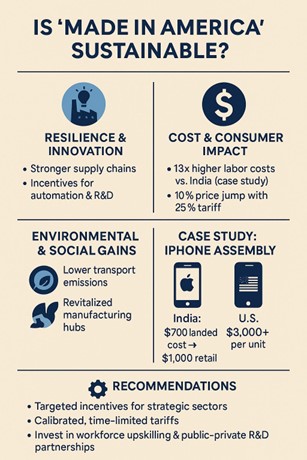
1️⃣ Resilience & Innovation
• Stronger supply chains
• Incentives for automation & R&D
2️⃣ Cost & Consumer Impact
• 13× higher labor costs vs. India (iPhone case study!)
• Potential 10% price jump if U.S. imposes a 25% tariff on India-made devices
3️⃣ Environmental & Social Gains
• Lower transport emissions
• Revitalized American manufacturing hubs
• But automation limits broad-based job growth
🔎 Case in Point: Apple iPhone Assembly
• India w/ PLI incentives: ∼$700 landed cost → $1,000 retail
• Add 25% U.S. tariff: landed cost jumps to $875 → $1,100 retail
• U.S. assembly without tariffs: projected >$3,000/unit 😮
⚖️ Bottom Line & Recommendations
• Targeted incentives for strategic sectors (semiconductors, clean energy)
• Calibrated, time-limited tariffs—not blanket duties
• Invest in workforce upskilling & public-private R&D partnerships
What are your thoughts on balancing cost vs. resilience in global manufacturing? 💬👇