Ever wondered why some organizations thrive while others implode under scandal? It often comes down to the interplay between formal governance and everyday culture.
👉 Key Insights
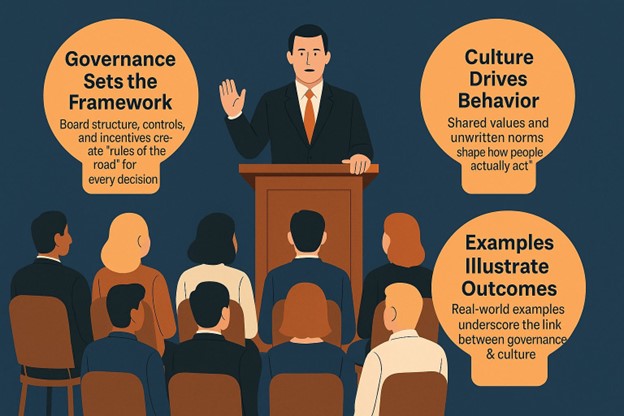
1️⃣ Governance Sets the Framework
📌 Board structure, controls, and incentives create “rules of the road” for every decision.
📌 Without clear oversight, unethical shortcuts become the norm (Enron, Wells Fargo).
2️⃣ Culture Drives Behavior
📌 Shared values and unwritten norms shape how people actually act.
📌 A “win-at-all-costs” mindset can override even the best-written policies.
3️⃣ The Two Reinforce Each Other
📌 Strong governance amplifies a healthy culture (Microsoft’s growth mindset + accountability).
📌 A vibrant culture—like Patagonia’s environmental activism—can inspire governance to embed purpose into executive pay and board mandates.
🚀 Actionable Takeaways for Leaders
1️⃣ Audit Your “Tone at the Top.”
💡 Does your board model the behaviors you expect? Consider independent directors or ethics metrics in exec comp.
2️⃣ Map Culture Gaps.
💡 Use pulse surveys and focus groups to uncover hidden norms. Chart where culture clashes with your formal policies.
3️⃣ Align Incentives with Values.
💡 Tie bonuses to long-term, non-financial KPIs—like customer trust, employee well-being, and sustainability.
4️⃣ Empower Safe Reporting.
💡 Launch or reinforce an anonymous hotline. Celebrate whistle-blowers who protect the company, not punish them.
💬 Your Turn: What’s one change you’ve made to bridge governance and culture? Share your experiences below! ⬇️