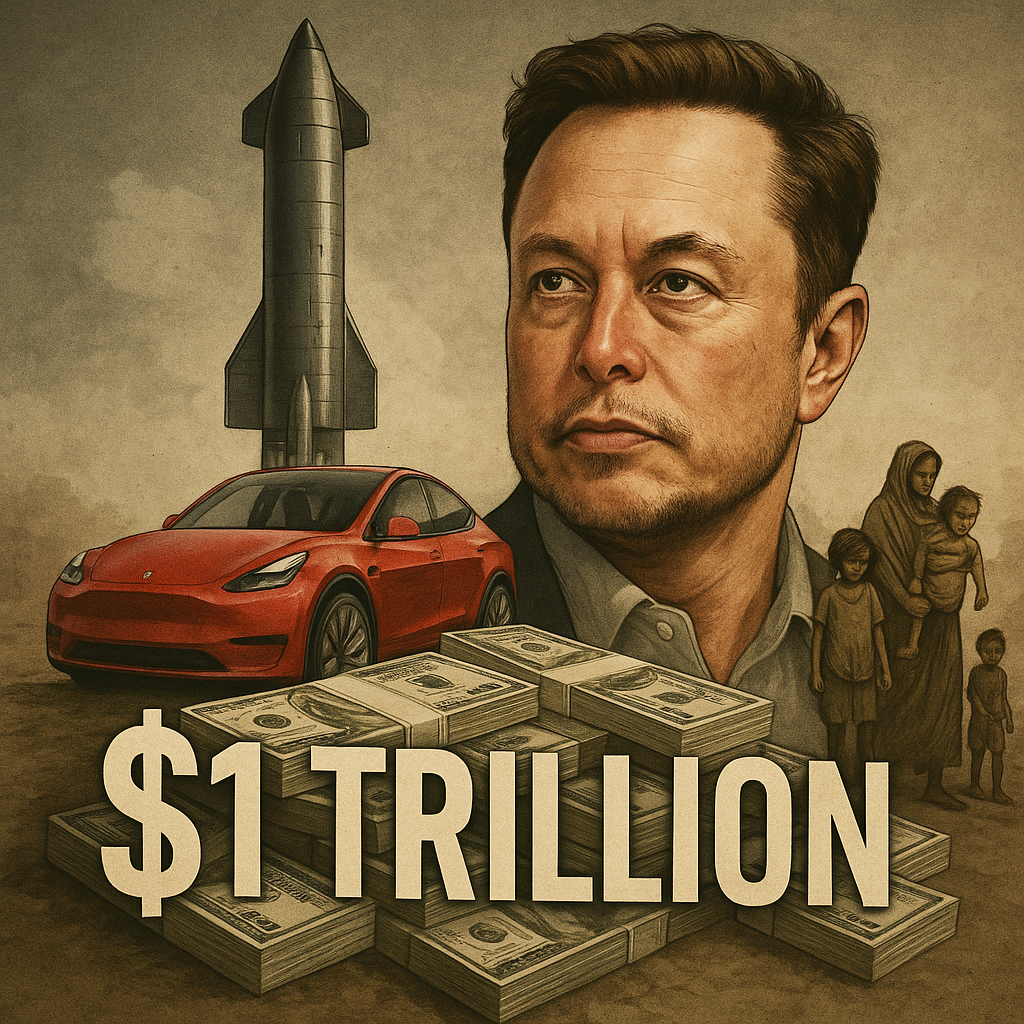
Elon Musk’s record-breaking $1 trillion compensation deal has reignited one of the most profound debates of our time — how much is too much when it comes to rewarding innovation?
From an analytical lens, Musk’s impact is undeniable. He’s disrupted industries, accelerated the EV revolution, commercialized space travel, and redefined technological ambition. Capital markets value vision, and Musk delivers it at scale.
But the question isn’t about his capability — it’s about proportion and purpose.
When a single individual’s wealth rivals the GDP of nations, what message does that send to the world struggling with income disparity, unemployment, and basic survival?
🔹 Have we equated economic success with human worth?
🔹 Should society celebrate limitless accumulation, while billions lack access to essentials?
🔹 And can innovation truly be called progress if it widens inequality instead of narrowing it?
Extreme wealth concentration distorts priorities. It risks creating a culture where “success” is measured by how much one takes, not how much one gives back.
True leadership should inspire both growth and generosity.
Imagine if even a small fraction of such wealth were reinvested into society — funding education, clean water, sustainable energy, and healthcare. The ripple effects would be transformative. That’s real legacy.
Let’s redefine success for this century:
➡ From accumulation to inclusion
➡ From valuation to values
➡ From personal fortune to collective future
The question isn’t whether Musk deserves his deal.
The real question is — what kind of world do we want to reward? 🌍